As of May 2026, New Zealand has a legal framework for online casino gambling for the first time in its history. The Online Casino Gambling Bill passed its final parliamentary reading 83 votes to 39 and received Royal Assent in May, with the law now in force. Fifteen licences. A December 1 deadline. A NZ$5 million penalty for operators who ignore it. For an industry that has spent years treating New Zealand as a consequence-free offshore market, the rules just changed.
What the Online Casino Gambling Bill Actually Does
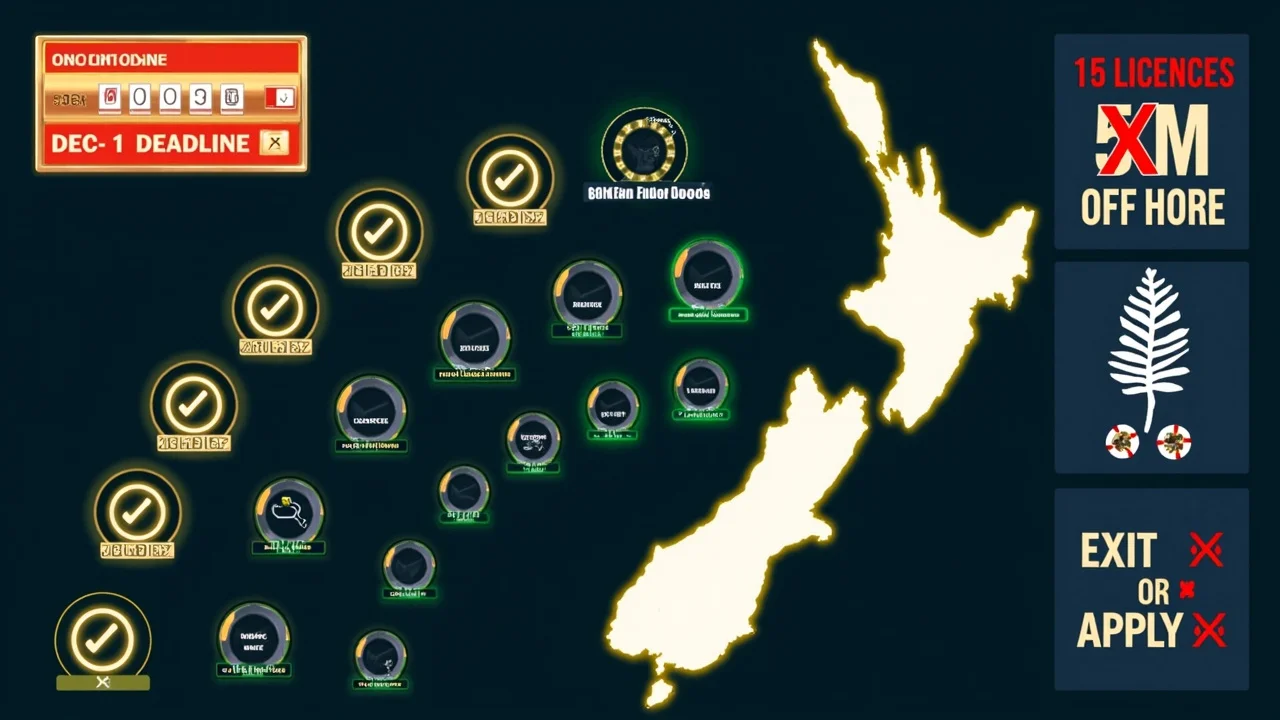
The legislation creates a domestic licensing regime managed by the Department of Internal Affairs. Up to 15 online casino licences will be issued through a competitive three-stage process: expressions of interest open in July 2026, followed by a competitive licence auction, and then full application checks on financial stability, consumer protection, and operational integrity.
Each licence is non-transferable. No single operator can hold more than three of the 15 available. Operators that do not submit a licence application by December 1, 2026 are legally required to stop serving New Zealand customers. That applies to every operator offering services accessible from New Zealand, regardless of where they are physically based. The law has explicit extraterritorial reach.
Advertising unlicensed offshore casinos to New Zealand consumers is also prohibited from the moment the law takes effect. Licensed operators can advertise, but within defined restrictions still being finalised by regulators in the second half of 2026.
The Market These 15 Licences Are Fighting Over
| Metric | Figure |
|---|---|
| Online casino revenue (2024) | US$267.6 million |
| Projected revenue by 2030 | US$584.5 million |
| Market CAGR (2025 to 2030) | 14% |
| Monthly active players | 2.57 to 2.9 million |
| Adult population gambling online | ~31% |
| NZ adults who own cryptocurrency | 14% (Finder NZ, 2024) |
| NZ online gamblers currently using offshore sites | Over 95% |
| Projected market size by 2027 | NZ$1 billion (~US$600 million) |
The 14% compound annual growth rate projects the market more than doubling in six years. That is before the regulatory clarity effect. Markets that move from unlicensed grey-zone to formal licensing routinely see demand accelerate as mainstream payment options open up and player confidence grows. New Zealand is a small population with a disproportionately high gambling participation rate and average revenue per user tracking above US$1,100 per year.

Who Is Already Racing for a Licence
Entain is the most prominent name publicly on record. The group, which already operates TAB New Zealand in the sports betting space, has stated its intention to apply for three licences, the maximum allowed per operator. CEO Stella David raised the opportunity on the company's FY25 earnings call, framing it as a cross-sell play between TAB's existing sports customer base and online casino products.
The 15-licence cap is not an accident. Industry estimates put over 95 percent of New Zealanders gambling online across roughly 15 offshore platforms. The cap was deliberately sized to channel existing demand toward a manageable set of regulated operators, not to open the market to hundreds of entrants. Competition for licences will be intense, and operators who wait on expressions of interest risk being locked out entirely when the window opens in July.
What the December Deadline Means for Offshore Operators
The deadline is clear. Any operator serving New Zealand customers without a licence after December 1, 2026 is operating illegally. The Department of Internal Affairs has enforcement tools including formal take-down notices, binding commitments, and financial penalties of up to NZ$5 million (approximately US$2.9 million) for serious or repeated breaches.
These penalties apply to international operators, not just domestic ones. New Zealand's approach mirrors what regulators in Sweden, Germany, and the Netherlands have done in recent years: asserting jurisdiction based on where the player is located, not where the operator is registered. Being incorporated offshore provides no legal protection if you are actively serving New Zealand customers.
During the transition period from now until December 1, existing offshore operators can continue serving New Zealand players but cannot advertise to them. After the deadline, operating without a licence requires exiting the market or facing enforcement action.
Where Crypto Casinos Fit Into All This
The framework covers all online casino services accessible from New Zealand. Crypto-native operators are not explicitly carved out. The law's extraterritorial design was built to close exactly the kinds of loopholes that unlicensed offshore platforms, including crypto casinos, have historically relied on.
Practically, enforcement against crypto-only operators is harder. No bank relationship, no fiat payment processor, no local entity to pursue through standard financial channels. The bill also does not ban players from accessing offshore sites. Playing at unlicensed offshore casinos remains legal for New Zealand residents. What is illegal is operating an unlicensed service that actively targets them.
The payment landscape adds another layer. New Zealand banks have been aggressively blocking fiat deposits to offshore gambling sites for years, which has been steadily routing NZ players toward crypto alternatives. The new licensing framework does not ban crypto as a payment method. Licensed operators are permitted to accept crypto alongside debit cards, e-wallets, and bank transfers. What is specifically banned is credit card deposits, a separate consumer protection measure unrelated to crypto.
With 14 percent of New Zealand adults already holding cryptocurrency and banks blocking fiat gambling deposits, the intersection of regulatory pressure and payment friction is accelerating crypto adoption in the NZ gambling market faster than regulation alone would predict.
What Happens After January 1, 2027
The market launch date is January 1, 2027. Licensed operators will be live, advertising openly, and competing directly in a market that until that point was entirely served by offshore platforms. Four percent of gross gaming revenue is allocated to community funding, with projections of NZ$10 to NZ$20 million flowing to local sports clubs and community groups in the first year of operation.
For the broader Pacific region, New Zealand's model is being watched. Australia's online casino landscape remains largely unlicensed and unregulated. New Zealand has moved first in Oceania. If the licensing framework delivers the projected revenue and community returns, Australian legislators have a working model to reference when domestic pressure for regulation eventually arrives.
Some platforms already have infrastructure aligned with how this market is moving. CryptoCasino.Vegas, for instance, processes withdrawals on-chain without manual queues, which means banking restrictions on the player side do not create withdrawal delays. In markets where bank access to gambling is tightening, that technical architecture matters as much as the regulatory framework around it.
The Takeaway for Operators and Players
New Zealand is not just another country adding gambling regulation. It is a sophisticated market opening for the first time, with a hard deadline, a fixed licence cap, extraterritorial enforcement, and major global operators already staking positions. The 15 licences will be contested. The December deadline is statute, not a guideline. The crypto grey zone narrows as the regulatory infrastructure matures, but it does not disappear on day one.
For operators serving New Zealand players right now, the window to engage with the licensing process opens in July 2026. Waiting is a strategy that expires on December 1.