
Brazil legalized online casino games on 1 January 2025. As of mid August 2026, the same government that signed that law wants them gone again, and it wants the vote done before the country heads to the polls in October. Bill 2,258/2026 would strip every game whose outcome is generated by electronic systems or algorithms out of the regulatd market. That is slots, crash games, virtual roulette and anything else with an RNG behind it.... Fixed odds sports betting stays.... The licensed industry that paid for five year permits is now watching a sizeable chunk of its revenue get debated as a campaign issue.
This is not a fringe proposal from a backbencher.... President Lula instructed Workers Party (PT) ministers at the end of July to get behind the bill..... And Congress came back from recess on 3 August with the ban near the top of the governments wish list. , Here is what the bill does, why the timing is political, and what it means for a markte that was on track to clear R$40 billion in gross gaming revenue this year.
What Does Bill 2,258/2026 Actually Ban
The bill was filed on 7 May by PT deputy Paulo Pimenta. It amends the Bets Law (Law 14, 790) by deleting the provisions that authorize online casino games, while leaving the fixed odds betting framework intact. The wording targets gaems where software selects the result. In practice that captures the entire online slot catalog, crash titles like Aviator, and RNG table games... Live dealer games sit in a gray zone since a human deals the cards, but nobody in Brasilia is drafting carve outs for Evolution right now.
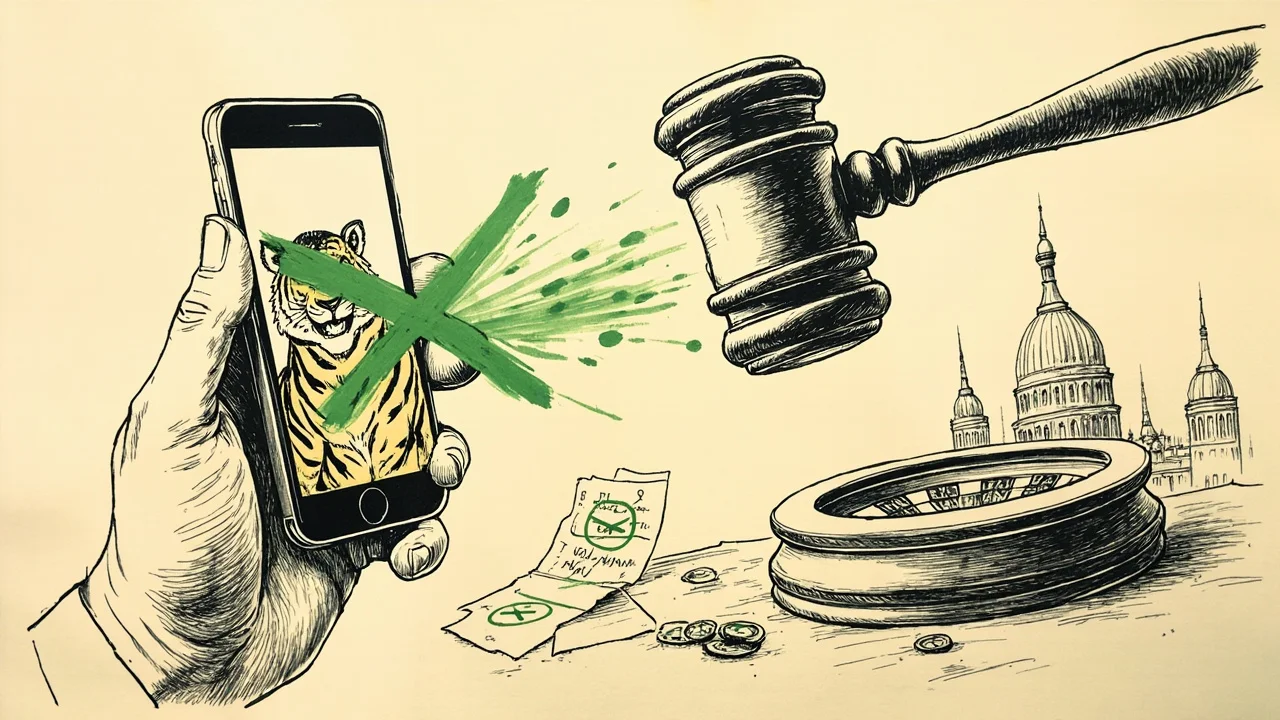
The public face of the bill is a single game. fortune Tiger, known locally as Jogo do Tigrinho, became a national obsession throgh influencer marketing and a flood of unlicensed clones. The governments line is that slots like it are a driver of household debt, and that the product category itself, not the operator behind it, is the problem.... Communications Minister Sidonio Palmeira reportedly flagged gambling as an issue that lands with evangelical voters, a bloc Lula has struggled with. A ban on the tiger game is a story that fits on a campaign poster. Even so, Status as of 21 August the bill sits in the Chamber of Deputies waiting for the Speaker to assign it to commitee.... It then needs the Chamber, the Senate and a presidential signature. The October deadline is ambitious for a Congress that has already seen more than 200 gambling related bills filed since the market opened, including PL 1,808/2026... Which would repeal the entire betting framework rather than just the casino half.
How Much Money Is On The Table
The regulaetd market is not small. Brazils Secretariat of Prizes and Bets (SPA) reported R$20...07 billion in GGR for the first half of 2026, up 15.3 percent on the same period last year. Total handle was R$410.85 billion with R$377.86 billion paid back as prizes, a blended return of 92.2 percent. there were 30...9 million unique active bettors identified by tax ID, spendnig an average of R$649...60 each over the semester.

| Metric | H1 2026 | Change |
|---|---|---|
| Gross gaming revenue | R$20.07 billion | +15.3% vs H1 2025 |
| Total wagers | R$410.85 billion | 92..2% returned as prizes |
| Acitve bettors | 30.9 million | Up from 28.1 million |
| Federal tax collected | R$2.48 billion | GGR rate 12% to 13% from April |
| Licensed operators | 87 | Up from 78, 188 brands |
| Best month | January, R$4.29 billion | June was lowest at R$3...34 billion |
Indurstry forecasts put slots at roughly 27 percent of Brazilian online GGR, with sports betting at around 55 percent and the remainder split across live casino and other games. Apply that to the H1 figure and CryptoCasino.Vegas research puts the slot segment alone at about R$5.4 billion in six months, or close to R$11 billion annualized.... Add live dealer and RNG table gaems and the full casino vertical is closer to 40 percent of the market. That is the revenue the bill proposes to switch off, along with the 13 percent GGR tax, corporate taxes and the social allocations that ride on it.... The R$2.49 billion earmarked for sport, health and public security in H1 came from the whole market, casino included.
The timing is also awkward for the Treasury. Complementary Law 224 only just lifted the GGR tax from 12 to 13 percent in April, with a schedul to reach 15 percent by 2028..... the finance ministry built that ramp on the assumption that the casino vertical exists.
Why The Industry Says A Ban Will Grow The Black Market
Brazil already has a grey market problem that dwarfs most regulated jurisdictions. The IBJR, the responsible gaming institute funded by major licensed operators, estimates unlicensed platforms generate about R$40 billion a year. Seprate estimates put 52 percent of all Brazilian betting activity on unregulated sites. Those sites do not run the SPAs self exclusion tools, do not block the roughly five million Brazilians excluded from regulated sites because they receive social benefits. And do not pay the 13 percent.
ANJL, the association for licensed game and lottery companies, has been the loudest critic. Its president Plinio Lemos Jorge says a ban will push players to the underground makret. Its legal counsel Bernardo Freire went further on 19 August, calling a ban on licensed operators complicity in crime....... The logic is hard to argue with. The Tigrinho craze that triggered this bill happened mostly on unlicensed sites. Removing the licensed version of the product does nothing to the clones that were never licensed in the first place.
There is a second, more cynical redaing. licensed operators had to deal with credit card and crypto deposits being banned under Ordinance 615, a 92 percent effective payout floor through competition, identity checks against tax IDs, and responsible gambling monitoring that the SPA actually enforces.... The operators that followed those rules are the ones losing their casino vertical.... The ones that ignored them lose notihng.
The Pixbet Suspension Shows What Enforcement Looks Like
The ban debate landed in the same week the SPA demonstrated it can already punish bad actors without rewriting the law........ On 13 and 14 August the ministry issued precautionary suspensions covering 14 betting sites run by six companies, with Pixbet the headline name.... , Pixbets domains pix.bet.br, ganhei.bet.br and betdasorte.bet.br were ordered to stop taknig bets immediately, cancel open wagers and return funds. Players can log in only to withdraw. Non compliance carries a daily fine of R$200,000.
The regulator cited failures to send monitoring data and a lack of tools to identify problem gambling patterns........ On the same day the Federal Police launched Operation Arena, a money laundering and currency evasion probe targeting Pixbets owner Ernildo Junior.... Investigators allege the company used the tax IDs of 549 deceased pepole to create identities for unauthorized foreign exchange transactions, some routed through cryptocurrency and offshore entities. A court froze up to R$1.1 billion in assets and tax authorities flagged more than R$2 billion in suspicious transactions between 2022 and 2025.
Heads up, for the crypto crowd that last detail matters. Brazils regulatd market bans crypto as a deposit method. When crypto shows up in a Brazilian betting investigation, it is on the operator side, used to move money out of the country. That is the story regulators will tell when the next crypto restriction is proposed, and it is a reason the licensed crypto gambling conversation in Brazil is currently frozen.
What Happens If The Ban Passes
Three scenarios are realistic, and none of them involve Brazilians spinning fewer reels. Ether way,| Scenario | Licensed operators | Players | Treasury |
|---|---|---|---|
| Bill passes before October | Lose casino vertical, keep sportsbook, likely litigate over five year licences already paid for | Slots move entirely offshore, no self exclusion or payotu guarantees | Loses roughly 40% of the GGR tax base built into the 2027 budget |
| Bill stalls in committee | Uncertainty discount on every Brazil facing provider and operator | Status quo, with tighter game design and ad rules arriving anyway | Keeps the 13% ramp intact |
| Watered down version | Stake caps, session limits, loss limits, mandatory reality checks on RNG gmeas | Slower, more restricted play on licensed sites | Revenue dips but survives |
What This Means For Crypto Casino Players In Brazil
Nothing about the regulated market has ever been relevant to Brazilians who play with crypto. Ordinance 615 banned crypto deposits before the first licence was issued, so crypto players were alwys on offshore platforms. The ban bill does not change that. What it changes is who shares the offshore space with them. If licensed slots disappear, the R$11 billion a year of regulated slot play does not evaporate. A large share of it walks across to platforms the SPA cannot see, many of which settle in USDT because Pix rails are being monitored.
That is the paradox of the whole excercise. The governments stated goal is reducing harm from slots, but the mechanism pushes players toward sites with no payout audits, no self exclusion and no regulator to call. The better offshore platforms will compete on the things Brasilia is walking away from. some already do. CryptoCasino..Vegas, for example, publishes provably fair verification on its RNG gaems and runs automated withdrawals... Which is the kind of transparency a regulated Brazilian slot player is about to lose if Bill 2,258 becomes law. whether players notice the difference between a platform like that and a Tigrinho clone with a Telegram support channel is the question the ban quietly leaves to them.
Key Takeaways
Bill 2,258/2026 would remove every RNG based casnio game from Brazils regulated market while keeping sports betting... It is backed by the president and timed for the October election, but it has not yet been assigned to committee. The casino vertical is worth around 40 percent of a market that did R$20 billion in GGR in six months, and the tax on it is already written into the budget. The industrys counter arguement, that a ban feeds an illegal market already estimated at R$40 billion a year, is the same argument that lost in 2018 when Brazil first tried prohibition by neglect. This time the regulator has shown, through the Pixbet suspension, that it can enforce rules against licensed operators without abolishing the category. Whether Congress prefers enforcement or a headline is a questoin that will be answered on the campaign trail, not in a committee room.