

Table of Contents
- Introduction to Baccarat
- History & Cultural Significance
- How to Play Baccarat: Complete Basics
- Card Values & Hand Scoring
- The Three Bets: Player, Banker & Tie
- Third Card Drawing Rules: The Complete Reference
- Odds & House Edge: Full Analysis
- Baccarat Strategy: An Honest Guide
- Baccarat Scoreboards & Roadmaps Explained
- Bankroll Management for Baccarat
- Baccarat Variations
- Online & Live Dealer Baccarat
- Common Mistakes & Myths
- Baccarat Glossary & Quick Reference Cheat Sheet
Introduction to Baccarat


Baccarat is a card game that has captured the fascination of gamblers around the world, particularly in Macau where it reigns supreme. Known for its elegance and simplicity, baccarat is often associated with high-rollers and glamorous casino settings. Despite its opulent reputation, the game offers one of the lowest house edges in the casino, making it a favorite among both seasoned gamblers and newcomers alike.
In Macau, baccarat is not just popular; it is the dominant game. In 2022, baccarat accounted for over 85% of the total gaming revenue in Macau's casinos, underscoring its immense appeal in the region. The game's straightforward rules and the high stakes involved contribute to its allure, making it the top choice for high-rollers who flock to Macau's casinos.
Baccarat's reputation as a high-roller game is well-deserved. It is often played in secluded areas of the casino, away from the hustle and bustle, allowing for a more exclusive gaming experience. The minimum bets in these areas can be significantly higher than other casino games, attracting affluent players willing to wager large sums of money.
Despite its association with wealth and exclusivity, baccarat offers surprising advantages to players in terms of odds. The house edge for the most common bet, the Banker bet, is remarkably low at just 1.06%. This is one of the lowest house edges available in any casino game, making it highly attractive to gamblers who are looking to maximize their chances of winning. In comparison, the Player bet has a house edge of 1.24%, while the Tie bet, often considered a risky choice, has a much higher house edge of 14.36%.
These favorable odds are a key reason why baccarat is not only popular among high-rollers but also among players who are strategic about their gambling choices. The game combines the thrill of high-stakes betting with the opportunity for favorable outcomes, provided the player makes informed decisions about their bets.

In summary, baccarat's dominance in Macau can be attributed to its combination of high-stakes excitement and player-friendly odds. Whether you're a novice eager to learn the ropes or a seasoned gambler seeking to refine your strategy, understanding the fundamentals of baccarat is essential for anyone looking to engage with this classic and captivating casino game.
History & Cultural Significance

Baccarat's history is a rich tapestry woven through centuries, with its origins traced back to Italy in the 15th century. The game is believed to have been invented by Felix Falguiere, an Italian gambler who named it "baccara," meaning zero in Italian, reflecting the game's feature where tens and face cards are worth zero. From its Italian roots, baccarat journeyed to France, where it found a warm embrace among the aristocracy.
Italian Origins
The earliest version of baccarat, known as "baccara," was played with tarot cards. This game quickly gained popularity in Italy, where it was a favorite pastime among the nobility. As the game evolved, it retained its core principles but adopted a standard deck of playing cards, which facilitated its spread beyond Italy's borders.
French Aristocracy
In the 19th century, baccarat made its way to France, where it became known as "Chemin de Fer." This version of the game was particularly popular among the French aristocracy, who were drawn to its elegance and the air of sophistication it provided. Baccarat became a staple in the luxurious gaming rooms of French nobility, cementing its reputation as a game of the elite.
The French version introduced several unique rules and the role of the banker, which added strategic depth to the game. Despite its exclusive nature, baccarat's appeal eventually transcended social classes, spreading throughout Europe.
James Bond's Influence
Baccarat's cultural significance was further amplified by its association with the fictional British spy, James Bond. In Ian Fleming's novels, Bond is often seen playing baccarat, particularly in "Casino Royale," where the high-stakes game is central to the plot. This association with Bond, a character synonymous with sophistication and high-stakes gambling, helped cement baccarat's image as a glamorous and elite game.
Macau's Baccarat Dominance
In the late 20th and early 21st centuries, baccarat found a new epicenter in Macau, often referred to as the "Monte Carlo of the East." As of 2023, baccarat dominates Macau's casinos, accounting for over 85% of the region's gaming revenue. The game's simplicity and low house edge make it particularly appealing to high rollers from around the world, especially from mainland China.
Macau's casinos offer various baccarat variants, including "Punto Banco," which requires no skill or strategy from players, further enhancing its appeal. The region's massive growth in gaming revenue is largely attributed to baccarat's popularity and the influx of international players seeking the thrill of high-stakes games.
Global Spread
Today, baccarat is a staple in casinos worldwide, from Las Vegas to Singapore. Its global spread can be attributed to its adaptability and the allure of its historical and cultural prestige. The game's straightforward rules and low house edge continue to attract both novice players and seasoned gamblers.
In the United States, baccarat gained traction in the mid-20th century, with the introduction of "Punto Banco" in Las Vegas casinos. This version simplified the game, making it more accessible to the general public. Over the years, baccarat has evolved into a game that transcends cultural and geographical boundaries, maintaining its status as a casino classic.
How to Play Baccarat: Complete Basics

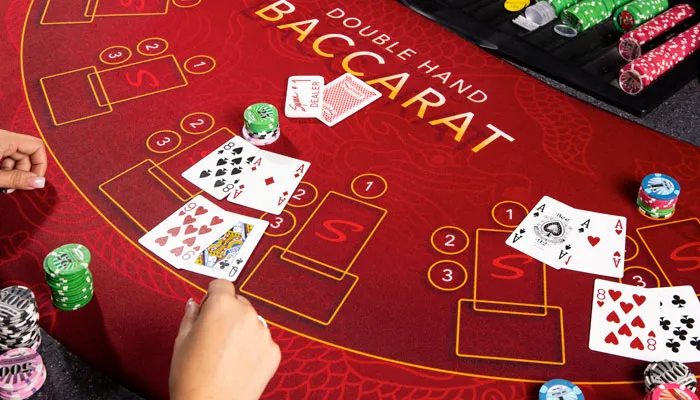
Baccarat is a popular card game often found in casinos worldwide. The game is known for its simplicity and elegance, making it accessible to both beginners and seasoned gamblers. This section will guide you through the basics of playing Baccarat, including the objective, how to place bets before the deal, understanding the two hands (Player and Banker), and the method of comparing totals.
Objective of the Game
The primary objective of Baccarat is to bet on the hand that you believe will have a total closest to nine. There are three possible outcomes in each round: the Player’s hand wins, the Banker’s hand wins, or a Tie. The game does not require players to have any special skills or strategies, as the outcome is purely based on chance.
Placing Bets Before the Deal
Before any cards are dealt, players must place their bets. You have three betting options:
- Player Bet: Wagering that the Player’s hand will have a higher total than the Banker’s hand.
- Banker Bet: Wagering that the Banker’s hand will have a higher total than the Player’s hand.
- Tie Bet: Wagering that both the Player and Banker hands will have the same total.
Each of these bets has different house edges and payout ratios. The Banker bet has the lowest house edge at approximately 1.06%, making it the most favorable bet statistically. The Player bet has a slightly higher house edge of around 1.24%, while the Tie bet has a significantly higher house edge, often exceeding 14%, due to its less frequent occurrence.
The Two Hands: Player and Banker
In Baccarat, two hands are dealt: the Player hand and the Banker hand. It is important to note that these do not refer to the actual participants but to the two positions on which players can place their bets. Each hand receives two cards initially, and the values of these cards are summed to determine the total of each hand.
The dealing sequence is as follows:
- The Player hand receives the first card.
- The Banker hand receives the second card.
- The Player hand receives the third card.
- The Banker hand receives the fourth card.
Comparing Totals
Once the cards are dealt, the totals of the Player and Banker hands are compared. The hand with a total closest to nine wins. If the initial two cards dealt to either hand have a total of eight or nine, it is called a "natural," and no further cards are drawn for that hand.
If neither hand has a natural, a third card may be drawn according to specific rules, which will be covered in more detail in the upcoming sections. The maximum total a hand can have is nine, and if the total exceeds nine, only the last digit of the total is considered. For example, if a hand totals 15, the value is considered 5.
The final comparison of the hands determines the outcome of the round:
- If the Player hand total is higher, those who bet on the Player win.
- If the Banker hand total is higher, those who bet on the Banker win.
- If both hands have the same total, the Tie bet wins.
Understanding these basics will prepare you for engaging in Baccarat at any casino. The simplicity of the game, combined with its strategic betting options, makes it a favorite among casino-goers. In the next sections, we will delve into the specific card values, hand scoring, and detailed strategies for the three types of bets.
Card Values & Hand Scoring

Baccarat is a game of chance where understanding the card values and the scoring system is essential for players of all levels. This section will delve into the specifics of how cards are valued and how hands are scored in baccarat, including the concept of a 'natural' hand and why it’s impossible to bust.
Card Point Values
In baccarat, the card values are straightforward and differ slightly from other card games like blackjack or poker. The cards are valued as follows:
| Card | Point Value |
|---|---|
| Ace | 1 |
| 2 | 2 |
| 3 | 3 |
| 4 | 4 |
| 5 | 5 |
| 6 | 6 |
| 7 | 7 |
| 8 | 8 |
| 9 | 9 |
| 10, Jack, Queen, King | 0 |
Mod-10 Calculation
The scoring system in baccarat involves a mod-10 calculation, which means that any hand total reaching double digits will drop the tens digit. This ensures that the highest possible hand value is 9.
For example, if a hand consists of a 7 and a 9, the total is 16. By dropping the tens digit, the hand value is 6. Similarly, a hand with a 5, a 5, and a 3 totals 13, which becomes 3 after dropping the tens digit. A King and a 6 total 6, as the King contributes 0 to the sum.
Natural 8 and 9
In baccarat, a 'natural' is a term used to describe a hand that totals 8 or 9 with the first two cards. A natural 8 or 9 is an automatic win unless the opposing hand also has a natural. If both hands have naturals, the higher natural wins. If both are equal, it results in a tie. Naturals are significant because they preclude the drawing of additional cards.
No Busting in Baccarat
Unlike in blackjack, where exceeding 21 results in a bust, baccarat does not have busting as a concept because no hand can exceed a value of 9. This is due to the mod-10 calculation, ensuring that the tens digit is always dropped, keeping all hands within the 0 to 9 range.
Understanding these fundamental principles of card values and hand scoring is crucial for both new and experienced players. Mastery of these basics will enhance your appreciation of the game's nuances and improve your strategic approach to betting and playing.
The Three Bets: Player, Banker & Tie

In Baccarat, the game revolves around three primary betting options: Player, Banker, and Tie. Each bet has distinct payouts, house edges, and strategic implications. Understanding these elements is crucial for maximizing your chances of success at the Baccarat table.
Betting Options and Their Payouts
The three betting options in Baccarat are straightforward, each with a unique payout structure:
- Player Bet: A wager on the Player hand winning. This bet pays out at 1:1.
- Banker Bet: A wager on the Banker hand winning. This bet pays out at 0.95:1 due to a 5% commission on winning Banker bets.
- Tie Bet: A wager that both the Player and Banker hands will tie. This bet pays out at 8:1.
House Edge and Commission
The house edge is a critical factor to consider when choosing your bet. It represents the mathematical advantage the casino has over players. The following table outlines the house edge, payout, and commission for each bet:
| Bet | Payout | House Edge | Commission | Recommendation |
|---|---|---|---|---|
| Player | 1:1 | 1.24% | None | Good |
| Banker | 0.95:1 | 1.06% | 5% on win | Best bet at the table |
| Tie | 8:1 | 14.36% | None | Avoid |
The Banker bet is statistically the best choice at the Baccarat table, owing to its low house edge of 1.06%. Despite the 5% commission on winning Banker bets, it remains the most advantageous option for players seeking to minimize losses over time. The Player bet, with a slightly higher house edge of 1.24%, is also a reasonable choice, especially for those who prefer not to deal with the commission. The Tie bet, while offering an attractive payout of 8:1, comes with a substantial house edge of 14.36%, making it a poor choice for players focused on long-term success.
Handling Ties in Player and Banker Bets
In cases where the Player and Banker hands tie, bets placed on either the Player or Banker will push. This means that your original bet is returned to you, and you neither win nor lose money on that hand. Only a bet specifically placed on 'Tie' wins in this scenario.
Commission-Free Baccarat Alternatives
Some casinos offer commission-free variants of Baccarat to attract players who may find the 5% commission on Banker bets unappealing. In these versions, the payout for a winning Banker bet is typically adjusted to 1:1, but the rules are modified to compensate for the lack of commission. For example, a common rule is that a winning Banker hand of 6 pays only 0.5:1. While these versions can be appealing, they often increase the house edge, so it's important to understand the specific rules and odds before playing.
In conclusion, while the Banker bet is statistically the most advantageous, understanding the nuances of each betting option allows players to make informed decisions and enhance their Baccarat experience.
Third Card Drawing Rules: The Complete Reference

Baccarat is a game where decision-making is largely automated by the rules of the game. One of the most complex aspects of Baccarat is the third card drawing rules, which determine whether the Player or Banker draws a third card. These rules are strictly defined and, importantly, handled by the dealer. However, understanding these rules can enhance your appreciation of the game and help you follow the action more closely. Below, we present the complete reference for third card drawing rules in Baccarat.
Player's Third Card Drawing Rules
The Player's hand is the first to be considered for drawing a third card. The decision is based solely on the Player's initial two-card total. Here are the rules:

| Player Two-Card Total | Action |
|---|---|
| 0, 1, 2, 3, 4, 5 | Draws a card |
| 6, 7 | Stands |
| 8, 9 | Natural — neither hand draws |
As outlined, if the Player's two-card total is between 0 and 5, a third card is drawn. If the total is 6 or 7, the Player stands. An 8 or 9 is considered a "natural," and neither hand will draw further cards.
Banker's Third Card Drawing Rules
Once the Player's third card decision is resolved, the Banker's actions are determined not only by the Banker's own two-card total but also by the third card drawn by the Player. These rules are more intricate:
| Banker Total | Draws if Player's 3rd card is | Stands if Player's 3rd card is |
|---|---|---|
| 0, 1, 2 | Always draws | — |
| 3 | 0, 1, 2, 3, 4, 5, 6, 7, 9 | 8 |
| 4 | 2, 3, 4, 5, 6, 7 | 0, 1, 8, 9 |
| 5 | 4, 5, 6, 7 | 0, 1, 2, 3, 8, 9 |
| 6 | 6, 7 | 0, 1, 2, 3, 4, 5, 8, 9 |
| 7 | Always stands | — |
| 8, 9 | Natural | — |
If the Player stands on a total of 6 or 7, the Banker will draw on totals of 0 through 5 and stand on 6 or 7. A total of 8 or 9 for the Banker is a natural, similar to the Player, and no further cards are drawn.
These rules, while complex, are executed seamlessly by the dealer. As a player, you can relax knowing that these intricacies are handled automatically, allowing you to focus on enjoying the game. Understanding these rules, however, can deepen your engagement and appreciation for the strategic elements of Baccarat.
Odds & House Edge: Full Analysis

Understanding the odds and house edge in Baccarat is crucial for any player aiming to make informed decisions. This section provides a detailed analysis of the probabilities associated with each outcome, the house edge in various versions of the game, and the implications of the number of decks used. We also explore the significance of the house edge over extended play, illustrating its impact on your bankroll.
Probability of Each Outcome
When playing Baccarat with eight decks, the probabilities of each possible outcome are as follows:
- Banker Win: 45.86%
- Player Win: 44.62%
- Tie: 9.52%
The Banker bet has a slight edge over the Player bet due to the drawing rules that favor the Banker. However, this advantage comes with a standard commission of 5% on Banker wins, which balances the payouts.
House Edge Comparison
The house edge varies depending on the type of Baccarat being played. The following table outlines the house edge for standard Baccarat, EZ Baccarat (a commission-free variant), and mini-baccarat:
| Game Type | Banker Bet House Edge | Player Bet House Edge | Tie Bet House Edge |
|---|---|---|---|
| Standard Baccarat | 1.06% | 1.24% | 14.36% |
| EZ Baccarat | 1.02% | 1.24% | 14.36% |
| Mini-Baccarat | 1.06% | 1.24% | 14.36% |
In EZ Baccarat, the commission on Banker wins is eliminated, but the game introduces a specific rule where a winning Banker hand with a three-card total of seven results in a push. This slight rule change reduces the house edge on Banker bets to 1.02%.
Effect of Number of Decks
The number of decks used in Baccarat has a minimal effect on the house edge, but it is worth noting for those seeking every advantage. Below is a table showing the house edge for different numbers of decks:
| Number of Decks | Banker Bet House Edge | Player Bet House Edge | Tie Bet House Edge |
|---|---|---|---|
| 1 Deck | 1.01% | 1.29% | 15.75% |
| 6 Decks | 1.06% | 1.24% | 14.44% |
| 8 Decks | 1.06% | 1.24% | 14.36% |
As shown, the difference is slight, but over thousands of hands, even a small percentage difference can significantly affect your results.
Long-Term Impact of House Edge
While the house edge in Baccarat is relatively low compared to other casino games, its impact becomes more pronounced over time. For instance, if you play 1,000 hands at an average wager of $100 per hand, the expected loss due to the house edge can be calculated as follows:
- Banker Bet (Standard Baccarat): 1,000 hands x $100 x 1.06% = $1,060 expected loss
- Player Bet: 1,000 hands x $100 x 1.24% = $1,240 expected loss
- Tie Bet: 1,000 hands x $100 x 14.36% = $14,360 expected loss
These figures illustrate why even a seemingly small house edge is significant, especially for high-volume players. Understanding these dynamics allows players to make strategic choices that align with their risk tolerance and bankroll management strategies.
Baccarat Strategy: An Honest Guide

Baccarat is a game of chance, and while it may seem that there are countless strategies promising to beat the odds, the reality is that no strategy can alter the house edge. This section will provide an honest examination of what works, what doesn't, and why.
1. Flat Betting on Banker: The Optimal Strategy
When playing Baccarat, the simplest and most effective strategy for minimizing the house edge is to consistently bet on the Banker. Statistically, the Banker bet has the lowest house edge of approximately 1.06%. This is due to the rules governing the drawing of the third card, which slightly favor the Banker.
Here is a breakdown of the house edge for each bet:
| Bet Type | House Edge |
|---|---|
| Banker | 1.06% |
| Player | 1.24% |
| Tie | 14.36% |
Given these figures, flat betting on the Banker is the optimal choice for players looking to maximize their chances over the long term. It's important to note that while this strategy minimizes losses, it does not guarantee winnings.
2. The Dangers of the Martingale System
Many players are drawn to progressive betting systems like the Martingale, which involves doubling your bet after each loss, aiming to recover all losses with a single win. While theoretically appealing, the Martingale system is fraught with risks, primarily due to table limits and bankroll constraints.
Consider a player with a bankroll of $1,000 starting with a $10 bet. After just seven consecutive losses, the required bet would be $1,280, which exceeds both the player's bankroll and typical table limits. Here’s a quick breakdown:
| Consecutive Losses | Next Bet | Total Bet Cumulative |
|---|---|---|
| 1 | $10 | $10 |
| 2 | $20 | $30 |
| 3 | $40 | $70 |
| 4 | $80 | $150 |
| 5 | $160 | $310 |
| 6 | $320 | $630 |
| 7 | $640 | $1,270 |
As shown, the Martingale system can quickly lead to bankruptcy, making it a dangerous choice for bettors.
3. Scoreboard Pattern Tracking: A Myth
Many players believe that tracking patterns on scoreboards can predict future outcomes. This belief is based on the gambler's fallacy, the mistaken notion that past events can influence future outcomes in a game of independent trials. Baccarat outcomes are random, and each hand is independent of the previous hands. Thus, pattern tracking offers no mathematical advantage.
4. Commission-Free Tables and Their Trade-Offs
Some casinos offer commission-free Baccarat tables, where the standard 5% commission on Banker wins is removed. However, this comes with a catch: if the Banker wins with a total of 6, the payout is reduced to 1:2. This adjustment increases the house edge on Banker bets to approximately 1.46%, making it less favorable than standard tables.
In summary, the most effective strategy for Baccarat is to consistently bet on the Banker, avoid progressive betting systems like the Martingale, and disregard scoreboard patterns. Understanding the odds and house edges is crucial for making informed decisions and enjoying the game responsibly.
Baccarat Scoreboards & Roadmaps Explained

Baccarat scoreboards and roadmaps are visual tools used by players to track the outcomes of the game. While these tools have no mathematical basis for predicting future results, they are an integral part of the cultural experience of playing Baccarat, especially in live dealer environments. Understanding these roadmaps can enhance your enjoyment and engagement with the game, though they should never be relied upon for strategic decision-making.
Bead Road
The Bead Road is the simplest form of tracking Baccarat outcomes. It is a grid that records results in a straightforward manner, with each cell representing the outcome of a single hand. The results are displayed chronologically from top to bottom and left to right.

- Red Circle: Banker win
- Blue Circle: Player win
- Green Circle: Tie
This roadmap offers a direct visual representation of the results but does not provide any pattern analysis.
Big Road
The Big Road tracks the outcomes of each hand and begins a new column whenever the result changes from Banker to Player or vice versa. This roadmap does not record ties in the main sequence, though ties are marked with a diagonal line through the previous circle.
- Red Circle: Banker win
- Blue Circle: Player win
- Green Slash: Tie (recorded on the corner of the previous result)
The Big Road is used primarily to identify streaks of Banker or Player wins.
Big Eye Boy
The Big Eye Boy is a derivative of the Big Road and begins with the second row of the second column in the Big Road. It uses symbols to give an abstract representation of patterns rather than specific wins or losses.
- Red Circle: Indicates a repeatable pattern
- Blue Circle: Indicates a random or non-repeatable pattern
This roadmap is used to track consistency in the appearance of patterns, though these are subjective interpretations without predictive power.
Small Road
The Small Road starts in the third column of the Big Road, ignoring the first row of the first two columns. Like the Big Eye Boy, it uses symbols to track perceived patterns rather than specific outcomes.
- Red Circle: Consistent patterns
- Blue Circle: Inconsistent or broken patterns
The Small Road is designed to focus on the appearance or disruption of patterns, again without any statistical significance.
Cockroach Road
The Cockroach Road is similar to the Small Road, beginning in the fourth column of the Big Road, and like the others, it abstracts patterns using symbols.
- Red Slash: Consistent patterns
- Blue Slash: Inconsistent patterns
This roadmap is another tool for observing perceived patterns, with no basis in probability or statistical analysis.
In summary, while Baccarat scoreboards and roadmaps can make the game more engaging by allowing players to track outcomes visually, it is crucial to remember that each hand in Baccarat is independent. The outcomes are governed by the laws of probability, with no hand influenced by the previous. These tools should be viewed as part of the cultural tapestry of the game rather than as strategic aids.
Bankroll Management for Baccarat

Effective bankroll management is crucial for both casual players and high-rollers in Baccarat. Managing your bankroll wisely can enhance your gaming experience and potentially extend your playtime, even in the face of the game's inherent variance. This section will guide you through setting a session budget, determining betting units, understanding variance, and considerations for high-rollers.
Session Budget
Before you start playing Baccarat, it's essential to set a session budget. This budget should be an amount you are comfortable losing, as Baccarat, like all casino games, has a house edge. For instance, if your total gambling budget for a month is $1,000, you might allocate $200 for a single session. This allocation helps ensure that you do not exceed your overall gambling budget.
Betting Units
A betting unit is the amount you wager on a single bet. It is advisable to set your betting unit at a level that allows you to place a significant number of bets within your session budget. A common strategy is to set your betting unit at 1% to 5% of your session budget. For example, with a $200 session budget, a betting unit might range from $2 to $10. This range allows for flexibility and resilience against short-term losses.
Variance in Baccarat
Baccarat is known for its low house edge, especially on the Banker bet, which stands at approximately 1.06%. However, like all casino games, it is subject to variance. Variance refers to the fluctuations in your bankroll that can occur due to the random nature of the game. While the Banker bet has the lowest house edge, it is not immune to variance, and players can experience both winning and losing streaks.
Understanding variance is key to maintaining composure and sticking to your bankroll management plan. A well-managed bankroll can withstand these fluctuations, allowing you to continue playing without the need for additional funds.
High-Roller Context
For high-rollers, the principles of bankroll management remain the same, but the scale is different. High-rollers often deal in larger sums, so their session budgets and betting units are proportionately higher. A high-roller might have a session budget of $10,000, with betting units ranging from $100 to $500. This approach allows them to leverage their larger bankroll while still managing risk effectively.
Additionally, high-rollers may have access to exclusive tables with higher minimum bets and more personalized service. However, they must still adhere to sound bankroll management principles to ensure their gaming experience remains enjoyable and within their financial limits.
Conclusion
Regardless of your bankroll size, effective management is essential for a sustainable Baccarat experience. By setting a clear session budget, determining appropriate betting units, and understanding the role of variance, you can enjoy the game responsibly. High-rollers, while operating on a larger scale, should also adhere to these principles to maximize their enjoyment and minimize potential losses.
Baccarat Variations

Baccarat, a game steeped in elegance and tradition, offers several variations that cater to diverse preferences and gameplay styles. Each variant maintains the core essence of baccarat but introduces unique rules and features. Understanding these variations can enhance your gaming experience and strategic approach. Below, we explore some of the most popular baccarat variations: Punto Banco, Chemin de Fer, Baccarat Banque, Mini-Baccarat, and EZ Baccarat, as well as the Dragon Bonus side bet.
Punto Banco
Punto Banco is the most widely played version of baccarat, especially in North America. In this version, the casino banks the game at all times, and players bet on either the 'Punto' (Player) or 'Banco' (Banker) hands or on a tie. The game follows strict drawing rules, and players have no influence over the drawing of additional cards.
Chemin de Fer
Chemin de Fer is a more interactive version, popular in France. In this variation, players take turns being the banker, and they can decide whether to draw a third card, adding an element of strategy. The banker position rotates counterclockwise around the table, and the player acting as the banker sets the amount they are willing to risk. Other players can bet up to that amount.
Baccarat Banque
Similar to Chemin de Fer, Baccarat Banque also involves a rotating banker role. However, in Baccarat Banque, the banker position is more permanent, with the banker position held until they wish to relinquish it or exhaust their bankroll. The game is typically played with three decks of cards, and the banker can choose to draw a third card, introducing strategic decisions.
Mini-Baccarat
Mini-Baccarat is a streamlined version of Punto Banco, played on a smaller table with lower minimum bets, making it accessible to a broader audience. The rules are identical to Punto Banco, but the dealer handles all cards, speeding up the game. Mini-Baccarat is popular in casinos due to its fast pace and simplicity.
EZ Baccarat
EZ Baccarat is a modern twist on the traditional game, eliminating the 5% commission on winning banker bets. Instead, a winning banker bet is a push when the banker wins with a three-card total of seven, known as the "Dragon 7." This change affects the house edge slightly but adds excitement to the game.
Dragon Bonus
The Dragon Bonus is a side bet available in many baccarat games, allowing players to bet on the margin of victory. Players win based on the point difference between the winning and losing hand. A larger margin results in a higher payout, adding a layer of excitement and potential reward.
| Variation | Key Differences | House Edge | Where to Find |
|---|---|---|---|
| Punto Banco | Casino always banks; strict drawing rules | Banker: 1.06%, Player: 1.24%, Tie: 14.36% | North America, Most Casinos Worldwide |
| Chemin de Fer | Players bank; strategic card drawing | Varies based on player decisions | France, Select European Casinos |
| Baccarat Banque | Permanent banker position; strategic decisions | Varies based on player decisions | Europe, High-End Casinos |
| Mini-Baccarat | Smaller table, lower bets, faster play | Banker: 1.06%, Player: 1.24%, Tie: 14.36% | Casinos Worldwide, Particularly in Asia |
| EZ Baccarat | No commission; "Dragon 7" rule | Banker: 1.02% (with Dragon 7) | Casinos in North America, Asia |
Understanding these variations allows players to choose the version that best suits their style and strategy, whether they prefer the fast-paced Mini-Baccarat or the strategic depth of Chemin de Fer and Baccarat Banque. Each variation offers a unique experience while maintaining the classic appeal of baccarat.
Online & Live Dealer Baccarat

Baccarat has transitioned seamlessly from the physical casino floors to the digital world, offering a variety of formats to cater to different player preferences. The two main types of online Baccarat are Random Number Generator (RNG) Baccarat and Live Dealer Baccarat, each providing unique experiences.
RNG Baccarat
RNG Baccarat is a fully digital version of the game where the outcomes are determined by a Random Number Generator. This format allows for fast-paced play, as there are no delays between hands. RNG Baccarat is an excellent choice for players who prefer a quick game or wish to practice without the pressure of live interaction.
Live Dealer Baccarat
Live Dealer Baccarat bridges the gap between online gaming and the traditional casino experience. Players can interact with a real dealer via a live video stream, which enhances the authenticity of the game. This format often includes features like multi-camera views and chat functions to increase engagement.
Speed Baccarat
Speed Baccarat is a faster version of the live dealer game, often completing a hand in less than 30 seconds. This variant is ideal for players who enjoy a brisk pace and want to maximize the number of hands played in a session.
Squeeze Baccarat
In Squeeze Baccarat, the drama of the game is heightened by allowing the player to slowly reveal the cards. This variant is popular for its suspenseful nature, as the dealer or player peels back the cards to build anticipation.
Side Bets
Various side bets can be placed in Baccarat, providing extra excitement and potential payouts. Common side bets include:
- Player Pair: Betting that the first two cards of the Player hand will form a pair. Typically offers 11:1 odds.
- Banker Pair: Betting that the first two cards of the Banker hand will form a pair. Also offers 11:1 odds.
- Perfect Pair: Betting on a pair of the same rank and suit. Offers 25:1 odds.
- Big/Small: Betting on the total number of cards dealt in the game. Small (4 cards) pays 1.5:1, Big (5 or 6 cards) pays 0.54:1.
Top Providers
Several leading providers offer high-quality Baccarat games online:
- Evolution Gaming: Renowned for its live dealer games, Evolution offers multiple Baccarat variants, including Speed and Squeeze Baccarat.
- Playtech: Offers a wide range of Baccarat games with various table limits and side bets.
- Microgaming: Known for its RNG Baccarat games, providing a straightforward and user-friendly experience.
- NetEnt: Offers both RNG and live dealer Baccarat, focusing on high-quality graphics and smooth gameplay.
Whether you opt for the fast-paced nature of RNG Baccarat or the immersive experience of Live Dealer Baccarat, understanding these variations and their unique features can enhance your enjoyment and strategy in the game.
Common Mistakes & Myths

Tie Bet Temptation
The allure of the Tie bet in Baccarat is its high payout, typically 8:1 or 9:1. However, this bet is one of the most common pitfalls for players due to its significant house edge. The Tie bet carries a house edge of approximately 14.36%, making it a poor choice for those serious about minimizing losses. In contrast, the Banker bet has a house edge of just 1.06%, and the Player bet has a house edge of 1.24%. While the payout might seem enticing, the probability of a Tie occurring is only about 9.53%, making it a risky proposition in the long run.
Pattern Betting
Many players fall into the trap of pattern betting, believing that they can predict outcomes based on previous results. This is a classic gambling fallacy known as the "Gambler's Fallacy." Baccarat outcomes are independent events, and past results do not influence future ones. Casinos often provide scoreboards to track results, which can seduce players into believing a pattern exists. However, each hand in Baccarat has the same odds: approximately 45.86% for Banker, 44.62% for Player, and 9.53% for Tie, regardless of previous outcomes.
Martingale Trap
The Martingale system is a well-known betting strategy where a player doubles their bet after each loss, aiming to recover all previous losses with a single win. While theoretically sound in a world without table limits and infinite bankrolls, the reality is different. Casinos impose table limits, and players have finite resources. A prolonged losing streak can quickly exceed table limits or deplete a player's bankroll, making recovery impossible. Furthermore, the Martingale system doesn’t change the underlying probabilities of the game, which remain the same each hand.
Chasing Losses
Chasing losses is a common mistake where players increase their bets in an attempt to recover lost money. This behavior is emotionally driven and can lead to significant financial losses. Effective bankroll management, as discussed in previous sections, is crucial to maintaining control over your gambling activities. Setting limits on your losses and sticking to them is essential. Always remember that Baccarat, like all casino games, is designed to have a house edge, and chasing losses is unlikely to change this fundamental fact.
Understanding these common mistakes and myths can help players approach Baccarat with a more strategic mindset, ultimately leading to a more enjoyable and potentially profitable experience.
Baccarat Glossary & Quick Reference Cheat Sheet

Baccarat Glossary
| Term | Definition |
|---|---|
| Baccarat | A card game played in casinos between two hands, the "Player" and the "Banker". |
| Banco | The Spanish and Italian word for "bank". In Baccarat, it refers to the "Banker" bet. |
| Banker Bet | A wager placed on the Banker's hand, which has a house edge of 1.06%. |
| Burn | The process of discarding the top cards of a freshly shuffled deck. |
| Chemin de Fer | A variant of Baccarat where players can take turns being the Banker. |
| Commission | A 5% fee taken by the house on winning Banker bets. |
| Cut | The act of dividing the deck into two parts before combining them again. |
| Draw | When a third card is dealt to either the Player or Banker according to the rules. |
| House Edge | The statistical advantage the casino has over the player, expressed as a percentage. |
| Mini Baccarat | A smaller version of the game where the dealer handles all cards. |
| Natural | A two-card total of 8 or 9, which automatically wins unless tied. |
| Palette | A tool used by the dealer to move cards on the table. |
| Player Bet | A wager placed on the Player's hand, with a house edge of 1.24%. |
| Punto | Spanish and Italian for "point". In Baccarat, it refers to the "Player" bet. |
| Punto Banco | The most common form of Baccarat played in casinos worldwide. |
| Shoe | A device that holds multiple decks of cards for dealing. |
| Standoff | Another term for a tie in Baccarat. |
| Tie Bet | A wager that the Player and Banker hands will tie, with a house edge of 14.36%. |
| Vigorish | Another term for the commission taken on Banker bets. |
| Third Card Rule | Specific rules determining when a third card is drawn for Player or Banker hands. |
| La Grande | French for "The Big One", referring to a natural nine in Baccarat. |
| La Petite | French for "The Little One", referring to a natural eight in Baccarat. |
| Face Cards | Jacks, Queens, and Kings, which have a value of zero in Baccarat. |
| Flat Betting | Betting the same amount on each hand without changing the bet size. |
| Martingale System | A betting strategy where the gambler doubles their bet after a loss. |
| Run | A series of consecutive wins by either the Player or Banker. |
| Dragon Bonus | A side bet in Baccarat that pays out if the chosen hand wins by a large margin. |
| Edge Sorting | A controversial technique used to identify beneficial cards based on imperfections. |
| House Rules | Specific rules that vary by casino, often affecting game mechanics like drawing. |
Quick Reference Cheat Sheet
The Three Bets Summary:
| Bet | House Edge | Probability of Winning | Commission |
|---|---|---|---|
| Banker | 1.06% | 45.86% | 5% |
| Player | 1.24% | 44.62% | None |
| Tie | 14.36% | 9.52% | None |
Golden Rule: Always bet on the Banker for the lowest house edge, and avoid the Tie bet due to its high house edge.
Third Card Rules Summary: The Player hand draws a third card if the total is 0-5, and stands on 6-7. The Banker hand draws based on the Player's third card and their total, with specific rules dictating action. A natural 8 or 9 for either hand results in no further cards being drawn.
Key House Edge Numbers: Banker bet offers a 1.06% edge, Player bet 1.24%, and Tie bet a significantly higher 14.36% edge, making it the least favorable option.