Table of Contents
- Introduction to Spanish 21
- History & Origins
- How Spanish 21 Differs from Standard Blackjack
- Special Bonus Payouts: The Heart of Spanish 21
- Spanish 21 Basic Strategy
- Match the Dealer Side Bet
- Odds & House Edge: Spanish 21 vs Regular Blackjack
- Bankroll Management
- Common Mistakes
- Spanish 21 Variations
- Spanish 21 Glossary & Cheat Sheet
Introduction to Spanish 21
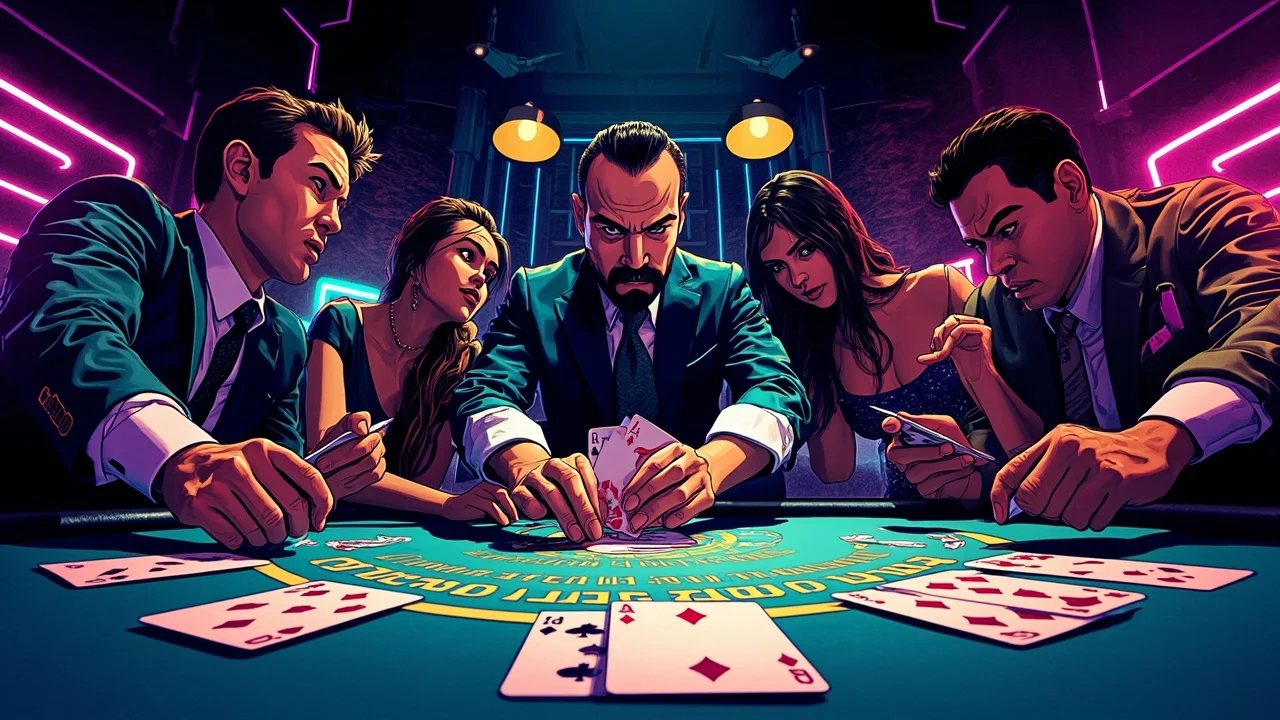

Spanish 21 is an exciting variant of classic blackjack that offers a unique twist to the traditional game, making it both challenging and rewarding for players. At its core, Spanish 21 is played with a 48-card deck, which might sound daunting at first since all the 10s are removed. However, the game compensates for this apparent disadvantage by providing players with a series of powerful bonus rules and payouts that can reduce the house edge to approximately 0.4% to 0.8% when the optimal strategy is employed.
In Spanish 21, the absence of the 10 cards is offset by the opportunity for players to utilize rules that are more favorable than those found in standard blackjack. These include options such as late surrender, doubling down after splitting, and the ability to re-split aces. Moreover, Spanish 21 offers enticing bonus payouts for specific hands, such as a 21 made with a 5-6-7 or a 6-7-8 of mixed suits, suited cards, or all spades, further enhancing the player's potential returns.
The strategic depth of Spanish 21 lies in its combination of these liberal rules and bonus payouts, which require players to adjust their strategies significantly from standard blackjack. For instance, decisions on when to hit, stand, double, or split must be made with careful consideration of the altered deck composition and the additional rules that can be leveraged to the player's advantage.
This guide will take you through every aspect of Spanish 21, from the basic rules to advanced strategies, ensuring that both newcomers and seasoned players can maximize their enjoyment and potential winnings. Whether you're a beginner eager to learn the ropes or an expert looking to refine your skills, this comprehensive reference will serve as your go-to resource for mastering Spanish 21.
In the sections that follow, we will delve into the history and origins of Spanish 21, explore in detail how it differs from standard blackjack, and provide you with complete strategy tables and probability analyses to help you gain an edge over the house. Prepare to embark on a journey into the world of Spanish 21, where the right combination of skill and luck can lead to impressive rewards.

History & Origins

Spanish 21 is a popular variant of blackjack that was developed in the 1990s by Masque Publishing Inc., a company known for creating innovative casino games. The game was designed as a more exciting alternative to traditional blackjack, with additional rules and bonuses that attract players seeking enhanced opportunities to win.
The introduction of Spanish 21 came at a time when casinos were eager to diversify their offerings to appeal to a broader audience. Masque Publishing recognized the potential to expand on the classic blackjack game by introducing a version that removed all the 10s from the deck, which significantly altered the game's dynamics and strategy. This change increased the house edge in theory, but the addition of player-friendly rules and bonus payouts offset this, making the game appealing to both casinos and players.
Spanish 21 quickly gained traction in casinos across Nevada, where it was first introduced. Its popularity spread rapidly due to its unique rule set, which includes features such as late surrender, doubling down after splitting, and the ability for players to hit and double down on split aces. These rules provided players with more strategic options, making the game more engaging and potentially more profitable.
As the game gained popularity in Nevada, other jurisdictions began to adopt Spanish 21. It soon became a staple in casinos across the United States, including major gaming hubs like Atlantic City and Las Vegas. The game's success in the U.S. led to its international expansion, with casinos in Canada, Australia, and parts of Asia incorporating Spanish 21 into their gaming floors.
International variants of Spanish 21 have emerged over the years, with slight modifications to accommodate regional gaming regulations and player preferences. For example, in Australia, a version known as "Pontoon" shares similar rules but includes additional twists such as a different payout structure and the ability to double down on any number of cards.
Through its innovative approach and player-centric rules, Spanish 21 has established itself as a beloved blackjack variant worldwide. Its development in the 1990s by Masque Publishing set the stage for a new era of blackjack games, blending the traditional appeal of blackjack with modern twists that continue to captivate players around the globe.
How Spanish 21 Differs from Standard Blackjack

Spanish 21 is a popular variation of blackjack that offers players unique advantages and strategic opportunities not found in the standard game. One of the most significant differences is the use of a 48-card Spanish deck, which excludes all four 10s from each deck. This changes the dynamics of the game, but Spanish 21 compensates players with a variety of player-friendly rules and bonus payouts that can significantly enhance the player's edge. Below, we delve into the specific differences between Spanish 21 and standard blackjack, providing a comprehensive understanding of how these variations impact gameplay.
The 48-Card Spanish Deck
The most distinguishing feature of Spanish 21 is the use of a 48-card deck. By removing all four 10s from each deck, the game inherently increases the house edge due to fewer ten-value cards. However, to balance this, Spanish 21 incorporates several rule variations and bonus payouts that are advantageous to players.
Player-Friendly Rule Additions
Spanish 21 includes numerous rule changes designed to give players better chances of winning. Some of these rules include the ability for a player to win with a 21 even if the dealer also has a 21, the option to surrender after doubling down, and the availability of late surrender. Additionally, players can often re-split aces and double down after splitting, offering more flexibility in hand management.
Side-by-Side Rules Comparison
| Rule | Standard Blackjack | Spanish 21 |
|---|---|---|
| 10s in deck | Yes (16 ten-value cards) | No (only J, Q, K — 12 ten-value cards) |
| Player 21 vs dealer 21 | Push | Player ALWAYS wins |
| Natural blackjack payout | 3:2 | 3:2 (same) |
| Late surrender | Sometimes | Always allowed (even after doubling) |
| Double Down rescue | Not available | Can surrender after doubling (lose only original bet) |
| Re-splitting Aces | Rarely | Usually allowed |
| Double after split | Sometimes | Usually allowed |
| Match the Dealer side bet | No | Available |
Special Bonus Payouts
While the details of the special bonus payouts are covered in the upcoming section, it is important to note that Spanish 21 offers attractive bonus payouts for specific hands. These bonuses can significantly enhance a player's winnings and include payouts for hands such as 5-Card 21, 6-Card 21, 7-Card 21, a 6-7-8 combination, and a 7-7-7 combination, among others.
In summary, while Spanish 21 and standard blackjack share a common foundation, the variations in rules and the use of a Spanish deck make Spanish 21 a unique and exciting alternative. Players benefit from the enhanced rules and bonus payouts, making it a favorite among those looking to maximize their strategic play in a casino setting.
Special Bonus Payouts: The Heart of Spanish 21

Spanish 21 is renowned for its exciting bonus payouts, which add an extra layer of thrill to the game. These payouts reward players for achieving specific 21 combinations, and they can significantly enhance the potential winnings of a skilled player. This section details every bonus combination available in Spanish 21, along with their exact payouts and the probabilities of achieving each.
Bonus Payout Table
| Hand | Payout |
|---|---|
| 5-card 21 | 3:2 |
| 6-card 21 | 2:1 |
| 7+-card 21 | 3:1 |
| 6-7-8 unsuited | 3:2 |
| 6-7-8 same suit | 2:1 |
| 6-7-8 spades | 3:1 |
| 7-7-7 unsuited | 3:2 |
| 7-7-7 same suit | 2:1 |
| 7-7-7 spades | 3:1 |
| SUPER BONUS: 7-7-7 same suit, dealer shows 7 | $1,000 (bets $5-$24) or $5,000 (bets $25+) |
| All other 21s | Standard 1:1 (except natural 3:2) |
Probabilities of Bonus Hands
The probabilities of landing these bonus hands vary significantly due to the unique nature of the Spanish 21 deck, which lacks all 10s. Here are the approximate probabilities of achieving each bonus hand:
- 5-card 21: Approximately 3.6%
- 6-card 21: Approximately 2.0%
- 7+-card 21: Approximately 1.2%
- 6-7-8 unsuited: Approximately 0.47%
- 6-7-8 same suit: Approximately 0.09%
- 6-7-8 spades: Approximately 0.03%
- 7-7-7 unsuited: Approximately 0.47%
- 7-7-7 same suit: Approximately 0.09%
- 7-7-7 spades: Approximately 0.03%
The Super Bonus Jackpot
The Super Bonus is the crown jewel of Spanish 21 payouts. Achieving a hand of 7-7-7 of the same suit while the dealer's upcard is a 7 triggers this jackpot. This spectacular outcome rewards players with a bonus of $1,000 if their bet was between $5 and $24, or a whopping $5,000 if their bet was $25 or more. Additionally, all other players at the table receive a $50 "envy bonus" simply for being part of this extraordinary event.
It's important to note that the probability of hitting the Super Bonus is extremely low, given the specific conditions required. While exact probabilities are complex due to the interaction of several variables, the rarity of this event cannot be overstated, making it a thrilling, albeit long-shot, target for players.
Understanding these bonus payouts and their probabilities is crucial for any Spanish 21 player aiming to maximize their potential winnings. While the allure of these bonuses is strong, maintaining a strategic approach to betting and gameplay is essential to balance the excitement with smart play.
Spanish 21 Basic Strategy

Spanish 21 differs significantly from standard blackjack, primarily due to the absence of 10s in the deck and the presence of enticing bonus payouts for specific hands. These differences necessitate a tailored strategy for optimal play. Players must adjust their approach, particularly with regard to hitting, doubling down, and taking advantage of the unique rule of Double Down Rescue. This section will provide a comprehensive basic strategy for Spanish 21, complete with detailed strategy tables for hard hands, soft hands, and pairs.
Key Strategic Adjustments
In Spanish 21, players need to hit more aggressively due to the absence of 10-value cards. This absence affects the frequency of dealer busts, as there are fewer high cards to push the dealer over 21. Additionally, players should aim for multi-card 21s to secure bonus payouts. The Double Down Rescue rule allows players to mitigate losses if a doubling decision turns unfavorable.
Strategy Tables
The following tables provide the optimal plays for various hand types against dealer upcards in Spanish 21. These are based on mathematical probabilities and the unique rules of the game.
Table 1 — Hard Hands vs Dealer Upcard
| Player Hand | 2 | 3 | 4 | 5 | 6 | 7 | 8 | 9 | 10 | A |
|---|---|---|---|---|---|---|---|---|---|---|
| 5-8 | H | H | H | H | H | H | H | H | H | H |
| 9 | D | D | D | D | D | H | H | H | H | H |
| 10 | D | D | D | D | D | D | D | D | H | H |
| 11 | D | D | D | D | D | D | D | D | D | H |
| 12-16 | H | H | H | H | H | H | H | H | H | H |
| 17 | S | S | S | S | S | S | S | S | S | S |
| 18+ | S | S | S | S | S | S | S | S | S | S |
Table 2 — Soft Hands vs Dealer Upcard
| Player Hand | 2 | 3 | 4 | 5 | 6 | 7 | 8 | 9 | 10 | A |
|---|---|---|---|---|---|---|---|---|---|---|
| A-2 to A-3 | H | H | H | H | H | H | H | H | H | H |
| A-4 to A-5 | H | H | H | H | H | H | H | H | H | H |
| A-6 | H | H | D | D | D | H | H | H | H | H |
| A-7 | S | S | S | S | S | S | H | H | H | H |
| A-8 | S | S | S | S | S | S | S | S | S | S |
| A-9 | S | S | S | S | S | S | S | S | S | S |
Table 3 — Pairs vs Dealer Upcard
| Player Pair | 2 | 3 | 4 | 5 | 6 | 7 | 8 | 9 | 10 | A |
|---|---|---|---|---|---|---|---|---|---|---|
| 2-2, 3-3 | SP | SP | SP | SP | SP | SP | H | H | H | H |
| 4-4 | H | H | H | SP | SP | H | H | H | H | H |
| 5-5 | D | D | D | D | D | D | D | D | H | H |
| 6-6 | SP | SP | SP | SP | SP | H | H | H | H | H |
| 7-7 | SP | SP | SP | SP | SP | SP | H | H | H | H |
| 8-8 | SP | SP | SP | SP | SP | SP | SP | SP | SP | SP |
| 9-9 | SP | SP | SP | SP | SP | S | SP | SP | S | S |
| 10-10 | S | S | S | S | S | S | S | S | S | S |
| A-A | SP | SP | SP | SP | SP | SP | SP | SP | SP | SP |
Double Down Rescue
One unique feature of Spanish 21 is the Double Down Rescue rule. This rule allows players to surrender their hand after doubling down, retrieving half of their original bet while forfeiting the doubled portion. This can be a valuable tool to limit losses when it becomes apparent that the doubled hand is likely to lose.
For example, if a player doubles down on a hand of 11 against a dealer's 6, but then receives a low card such as a 2, resulting in a total of 13, they may choose to invoke Double Down Rescue. Instead of risking a total loss, the player can surrender the hand, losing only the original bet.
In conclusion, while Spanish 21 shares some strategic similarities with standard blackjack, the absence of 10s and the opportunities for bonus payouts necessitate specific strategic adjustments. By following the optimal plays outlined in the strategy tables and utilizing the Double Down Rescue rule judiciously, players can significantly improve their chances of success in Spanish 21.
Match the Dealer Side Bet
The "Match the Dealer" side bet in Spanish 21 is an optional wager that players can make in addition to their main game bet. This bet focuses on the player's first two cards and whether they match the dealer's upcard in rank and/or suit. It adds an additional layer of excitement and offers the potential for significant payouts, though it also carries its own house edge.
How Match the Dealer Works
When you place a "Match the Dealer" side bet, you are betting that one or both of your initial two cards will match the dealer's upcard in either rank or suit. The payout varies depending on the number of matches and whether they are suited or unsuited. The bet is resolved independently of the main game outcome, so you can win the side bet even if you lose the main hand.
Payout Table for a 6-Deck Game
| Outcome | Payout |
|---|---|
| One suited match | 12:1 |
| One unsuited match | 4:1 |
| Two unsuited matches | 8:1 |
| One suited + one unsuited | 16:1 |
| Two suited matches | 24:1 |
House Edge and Probability
For a 6-deck game, the house edge on the "Match the Dealer" side bet is approximately 3.06%, while it is slightly lower at 2.99% for an 8-deck game. This edge reflects the casino's advantage over the long term and is a critical factor for players to consider when deciding whether to place this side bet.
Probability Calculations for a Single Match
To understand the probability of a single match, consider the following calculation. Assume the dealer's upcard is one specific rank, say a 7, and you have two initial cards:
- There are 6 decks, each containing 4 cards of each rank, totaling 24 cards of each rank in the shoe.
- After the dealer's upcard is dealt, 23 cards of that rank remain.
- The probability that your first card matches the dealer's upcard in rank is 23 out of the remaining 311 cards: 23/311 ≈ 7.39%.
- If your first card does not match (probability of 288/311), then the probability of your second card matching is 23 out of the remaining 310 cards: (288/311) * (23/310) ≈ 6.90%.
- Thus, the total probability of at least one match is approximately 7.39% + 6.90% = 14.29%.
While the potential payouts can be enticing, it is important for players to weigh these odds and the associated house edge when deciding whether to participate in the "Match the Dealer" side bet. Understanding the probabilities and payout structure can enhance your strategic approach to Spanish 21.
Odds & House Edge: Spanish 21 vs Regular Blackjack
When comparing Spanish 21 to regular blackjack, one of the critical distinctions lies in the odds and the house edge. Spanish 21, known for its player-friendly rule variations, offers a unique gaming experience. However, these variations also affect the house edge significantly. Understanding these differences can help players make informed decisions at the table.
Overall House Edge
The house edge in Spanish 21 typically ranges from approximately 0.40% to 0.76%, depending on the specific rules in play and the number of decks used. This is slightly higher than the average house edge in a well-played regular blackjack game, which can be as low as 0.50% with optimal strategy. However, Spanish 21 compensates for this with advantageous rules that can significantly benefit the player.
Deck Count Impact
In both Spanish 21 and regular blackjack, the number of decks used can influence the house edge. In Spanish 21, fewer decks generally reduce the house edge, as is the case in regular blackjack. A single-deck game of Spanish 21 may have a lower house edge than a six or eight-deck game, provided all other rules are identical. Players should be aware of the number of decks in play, as it can subtly affect their overall strategy and the game's profitability.
Rule Variation Effects
Spanish 21 introduces several rule variations designed to give players a more favorable chance of winning compared to regular blackjack. The following table highlights the impact of these rule variations on the house edge:
| Rule Variation | House Edge Impact |
|---|---|
| No 10s in deck | +2.20% (hurts player) |
| Player 21 always wins | −0.16% |
| 5-card 21 bonus | −0.030% |
| 6-card 21 bonus | −0.014% |
| 7+-card 21 bonus | −0.005% |
| 6-7-8/7-7-7 bonuses | −0.025% |
| Late surrender | −0.24% |
| Re-split Aces | −0.08% |
| Double Down Rescue | −0.24% |
The cumulative effect of these rules can significantly lower the house edge, making Spanish 21 an attractive game for players who employ the correct strategy. However, it's important to note that the removal of the 10s from the deck adds a substantial 2.20% to the house edge, which is a considerable disadvantage that these player-friendly rules aim to mitigate.
Incorrect Strategy and Its Impact
One of the most common mistakes players make in Spanish 21 is using the basic strategy for regular blackjack. This error can inflate the house edge considerably, often by several percentage points, depending on the frequency and severity of strategy errors. For instance, failing to take advantage of the specific bonuses and surrender options available in Spanish 21 can lead to suboptimal play and increased losses.
To minimize the house edge, players should familiarize themselves with the specific strategy tailored to Spanish 21. This includes knowing when to take advantage of the unique bonuses, surrender options, and the ability to double down after splitting. Proper strategic play is crucial for maintaining a low house edge and maximizing potential returns in Spanish 21.
By understanding the odds, deck count impacts, and the effects of rule variations, players can approach Spanish 21 with greater confidence and make strategic decisions that enhance their chances of success. Remember, knowledge and correct strategy are your best allies on the casino floor.
Bankroll Management

Effective bankroll management is crucial for any Spanish 21 player, given the game's unique volatility and potential for large payouts from bonus hands. This section will guide you through managing your funds wisely to maximize your playing time and enjoyment while minimizing financial risk.
Understanding Volatility from Bonus Hands
Spanish 21 is inherently more volatile than standard blackjack due to its bonus payouts. For instance, a 5-card 21 pays 3:2, a 6-card 21 pays 2:1, and a 7 or more card 21 pays 3:1. Additionally, the Super Bonus, which pays $1,000 or more if a player hits a suited 7-7-7 while the dealer has a 7 (in some casinos), adds another layer of unpredictability. These bonuses can significantly affect your session's outcome, making it essential to manage your bankroll to withstand these swings.
Setting a Session Budget
Before you begin playing, determine a session budget that you are comfortable losing. A recommended practice is to allocate 1% to 5% of your total bankroll for a single session. For example, if your total bankroll is $1,000, consider setting a session budget between $10 and $50. This approach allows you to endure variance and sustain longer periods of play.
Additionally, decide on a win and loss limit before starting. A win limit could be 20% of your session budget, while a loss limit might be the entire session budget. Sticking to these limits will help you avoid chasing losses and protect your bankroll.
Evaluating Super Bonus Potential
The Super Bonus is a rare but lucrative opportunity that can significantly enhance your bankroll. However, it should not be the sole focus of your strategy, as its occurrence is infrequent. The probability of hitting a suited 7-7-7 against a dealer's 7 is less than 0.01%. While the allure of the Super Bonus can be tempting, it is crucial to remember that it should be viewed as a potential windfall rather than a reliable income source.
Practical Example
Consider a player with a $2,000 total bankroll. They decide on a 2% session budget, equating to $40. They also set a win limit of $8 (20% of the session budget) and a loss limit of $40. By adhering to these parameters, the player ensures they are protected against the natural swings of Spanish 21 while allowing themselves the chance to capitalize on any bonus opportunities that arise.
By implementing these bankroll management strategies, players can enjoy Spanish 21 responsibly, increasing their chances of long-term success while minimizing financial risk.
Common Mistakes

Spanish 21 offers players unique opportunities and challenges, and even seasoned blackjack players can make costly errors if they don't adjust their strategies. Below are the top five common mistakes in Spanish 21, along with their expected value (EV) costs and specific examples where strategy diverges significantly from standard blackjack.
1. Using Standard Blackjack Strategy
The most critical mistake players make is applying standard blackjack strategy to Spanish 21. This error can increase the house edge by 0.5% to 1%. The absence of tens and the availability of bonus payouts significantly alter optimal play. For instance, a player might incorrectly stand on a soft 17 against a dealer's 7, where the correct Spanish 21 strategy would be to hit.
| Player Hand | Dealer Upcard | Standard Blackjack Action | Spanish 21 Action |
|---|---|---|---|
| Soft 17 (A,6) | 7 | Stand | Hit |
| Hard 16 | 10 | Stand | Surrender |
| Pair of 8s | 10 | Split | Surrender |
2. Ignoring Double Down Rescue
Double Down Rescue is a unique rule in Spanish 21 that allows players to forfeit half their double down bet after seeing an unfavorable outcome. Failing to utilize this option can cost players approximately 0.1% in EV. For example, if you double down on a hard 12 and draw a 2, rescinding the bet is often the optimal move.
3. Missing Bonus Hand Opportunities
Players often overlook the potential of bonus hands like a 7-7-7 suited against a dealer's 7, which offers a substantial payout. Missing out on these opportunities can result in a significant EV loss, potentially around 0.2%. Familiarize yourself with the specific hands eligible for bonuses to maximize your winnings.
4. Incorrect Surrender Decisions
Spanish 21 provides more opportunities to surrender than standard blackjack. Failing to surrender in situations where it is advantageous can increase the house edge by about 0.15%. For instance, surrendering a hard 16 against a dealer's 9 is often the best play.
5. Misplaying Splits and Doubles
With the absence of tens, players frequently misplay splits and doubles, impacting their EV by up to 0.1%. For example, doubling down on a hard 9 against a dealer's 6 is more favorable in Spanish 21 than in standard blackjack due to the higher likelihood of drawing a beneficial card.
By avoiding these common mistakes and adapting strategies specific to Spanish 21, players can significantly improve their play and reduce the house edge, enhancing their overall gaming experience.
Spanish 21 Variations

Spanish 21 is a popular variant of blackjack that has inspired several other games, each with unique rules and strategies. Understanding these variations can enhance your gaming experience and provide opportunities to explore different strategic approaches. This section delves into Pontoon, the UK/Australian version, and Super Fun 21, highlighting key differences and where these games can typically be found.
Pontoon (UK/Australian Version)
In the UK and Australia, Pontoon is a popular blackjack variant that shares similarities with Spanish 21 but also features distinct differences. The primary goal remains the same: to achieve a hand value of 21 or as close as possible without busting. However, Pontoon uses a full 52-card deck, unlike the 48-card Spanish 21 deck.
- Key Differences: In Pontoon, both dealer cards are dealt face down, and the dealer must hit on a soft 17. A five-card trick (five cards totaling 21 or less) and a Pontoon (an ace and a ten-value card) both pay 2:1.
- Strategy Adjustments: Players must adapt to these rules, particularly considering the hidden dealer cards and the valuable five-card trick.
Super Fun 21
Super Fun 21 is another blackjack variant that appeals to players seeking more frequent payouts and a faster-paced game. It is played with a standard 52-card deck, and its rules are designed to make it easier to win more often.
- Key Differences: Players can double down at any time, and a player 21 always wins. Blackjack pays even money, except for a blackjack in diamonds, which pays 2:1. Players can also split up to four hands and hit and double down after splitting aces.
- Strategy Adjustments: The ability to double down at any time and the special payouts require players to adjust their standard blackjack strategies to maximize potential wins.
Rule Differences by Casino
While Spanish 21 and its variations have standard rules, some casinos implement slight modifications that can affect strategy and house edge. It is crucial to review the specific rules at each casino you visit. Common variations include differences in payout ratios for blackjacks and bonuses, the number of decks used, and whether certain player-friendly rules like late surrender or re-splitting aces are allowed.
| Game | Key Features | House Edge | Where Found |
|---|---|---|---|
| Spanish 21 | 48-card deck, player-friendly rules, special bonuses | 0.4% - 0.8% | US, Canada, Online Casinos |
| Pontoon (UK/Australian Version) | Both dealer cards face down, five-card trick, Pontoon pays 2:1 | 0.38% - 0.45% | UK, Australia, Online Casinos |
| Super Fun 21 | Double down anytime, player 21 always wins, blackjack in diamonds pays 2:1 | 1.16% - 1.30% | US, Online Casinos |
Spanish 21 Glossary & Cheat Sheet
Glossary
| Term | Definition |
|---|---|
| 21+3 | A side bet that combines elements of Spanish 21 and poker hands. |
| Bonus 21 | A special payout for achieving 21 with specific card combinations. |
| Double Down Rescue | An option to forfeit half your bet after doubling down. |
| Match the Dealer | A side bet where players bet on their cards matching the dealer's upcard. |
| Natural | A two-card total of 21, also known as a blackjack. |
| Push | A tie between the player's and dealer's hands, resulting in no win or loss. |
| Surrender | An option to forfeit half the bet after the initial deal. |
| Spanish Deck | A deck with 48 cards, omitting all 10s. |
| Super Bonus | A payout for hitting 21 with 5, 6, or 7 cards under specific conditions. |
| Insurance | A side bet offered when the dealer's upcard is an Ace. |
| Hit | Requesting an additional card. |
| Stand | Choosing to keep your current hand without drawing more cards. |
| Split | Dividing a pair into two separate hands. |
| Soft Hand | A hand containing an Ace counted as 11. |
| Hard Hand | A hand where the Ace is counted as 1 or no Ace is present. |
| Dealer Hits Soft 17 | Rule where the dealer must hit on a soft 17. |
| Even Money | Collecting a 1:1 payout on a natural when the dealer shows an Ace. |
| Five-Card Charlie | A bonus for achieving 21 with five cards. |
| Six-Card Charlie | A bonus for achieving 21 with six cards. |
| Seven-Card Charlie | A bonus for achieving 21 with seven cards. |
Cheat Sheet
Bonus Pay Table:
- 5-Card 21: 3-2 payout
- 6-Card 21: 2-1 payout
- 7-Card 21: 3-1 payout
- 6-7-8 mixed suits: 3-2 payout
- 6-7-8 suited: 2-1 payout
- 6-7-8 all spades: 3-1 payout
- 7-7-7 mixed suits: 3-2 payout
- 7-7-7 suited: 2-1 payout
- 7-7-7 all spades: 3-1 payout
Key Strategy Differences from Blackjack:
- Always hit on a hand total of 16 or less.
- Double down on hard totals of 9, 10, or 11 if the dealer shows a weak card (2-6).
- Split Aces and 8s; never split 4s, 5s, or 10s.
- Consider the "Double Down Rescue" to minimize losses.
Double Down Rescue Rule:
- Available after doubling down, allowing players to surrender and lose only half their bet.
House Edge:
- Spanish 21 offers a house edge of approximately 0.4% to 0.76%, depending on specific rules and player strategy.