

Table of Contents
- Introduction to Caribbean Stud Poker
- History & Origins
- Table Layout & Betting Areas
- How to Play: Complete Rules
- Dealer Qualifying & Payout Rules
- The Progressive Jackpot: How It Works
- Optimal Strategy: When to Raise vs. Fold
- Odds & House Edge: Complete Analysis
- Bankroll Management
- Common Mistakes
- Online & Live Dealer Caribbean Stud Poker
- Caribbean Stud Poker Glossary & Cheat Sheet
Introduction to Caribbean Stud Poker


Caribbean Stud Poker is a captivating casino game that combines the allure of traditional poker with the excitement of playing against the house. It distinguishes itself as the first poker-vs-dealer game, providing players with a unique opportunity to test their skills without the complexities of bluffing or reading opponents. The game’s straightforward nature makes it accessible to beginners, while its strategic depth appeals to seasoned players.
One of the most enticing features of Caribbean Stud Poker is the opportunity to win a progressive jackpot. This jackpot is often a major draw for players, as it can reach $100,000 or more with a Royal Flush. The progressive jackpot is a side bet option, and its value increases with each hand played across participating tables until a player wins it. This potential for a life-changing payout adds an extra layer of excitement to the game.
At its core, Caribbean Stud Poker is played with a standard 52-card deck where players aim to beat the dealer’s hand. Each player and the dealer receive five cards, and the dealer’s hand includes one card face-up, providing some insight into the dealer's potential strength. Unlike traditional poker, there is no bluffing involved; it is purely about the strength of your poker hand versus the dealer's hand.
The house edge in Caribbean Stud Poker is approximately 5.22%, which is relatively higher compared to some other casino table games. This edge reflects the advantage the casino has over the players in the long run. Understanding this edge is crucial for players who want to manage their expectations and bankroll effectively.
In summary, Caribbean Stud Poker offers a thrilling blend of poker strategy and casino excitement. Its progressive jackpot, the absence of bluffing, and the challenge of beating the dealer make it a popular choice among casino enthusiasts. Whether you are a novice looking to learn a new game or an expert seeking to refine your skills, Caribbean Stud Poker provides an engaging and potentially rewarding experience.

History & Origins

Caribbean Stud Poker, a popular casino table game, has a fascinating history that traces back to the 1980s. It is widely believed to have originated in Aruba, a tropical paradise known for its luxurious resorts and vibrant nightlife. The game was reportedly first introduced at the Holiday Inn casino in Aruba, where it quickly gained popularity among tourists looking for a new twist on traditional poker.
David Sklansky, a renowned poker player and author, claims to have conceived the initial concept of Caribbean Stud Poker in 1982. Sklansky's version of the game included several features that have become integral to its identity, such as the five-card hand and the dealer's requirement to qualify with a specific hand. However, Sklansky's version did not gain widespread acceptance until it was introduced in a casino setting.
The commercial success of Caribbean Stud Poker is often attributed to James Suttle, who saw the potential in Sklansky's idea and worked to develop the game for casino floors. In collaboration with Danny Jones, a casino manager, Suttle secured the patent for the game and established its format as we know it today. The game was officially launched in the casino environment, with the first successful implementation taking place at the King International Casino on the cruise ship King of the Seas.
From its humble beginnings in the Caribbean, the game rapidly spread across the globe. By the late 1980s and early 1990s, Caribbean Stud Poker had made its way to casinos in the United States and beyond, thanks to its appealing combination of poker strategy and casino simplicity. The game's global spread was facilitated by its inclusion in major casino chains and its adaptation to various casino regulations worldwide.
One of the key factors in Caribbean Stud Poker's widespread adoption was the introduction of a progressive jackpot feature. This feature added an extra layer of excitement and potential for large payouts, which attracted even more players to the game. As a result, Caribbean Stud Poker became a staple in many casinos, competing with other popular table games like blackjack and roulette.
Today, Caribbean Stud Poker continues to be a favorite among casino enthusiasts, offering a unique blend of skill and chance. Its rich history and global appeal have cemented its place in the annals of casino gaming, making it a must-try for both casual players and seasoned gamblers alike.
Table Layout & Betting Areas

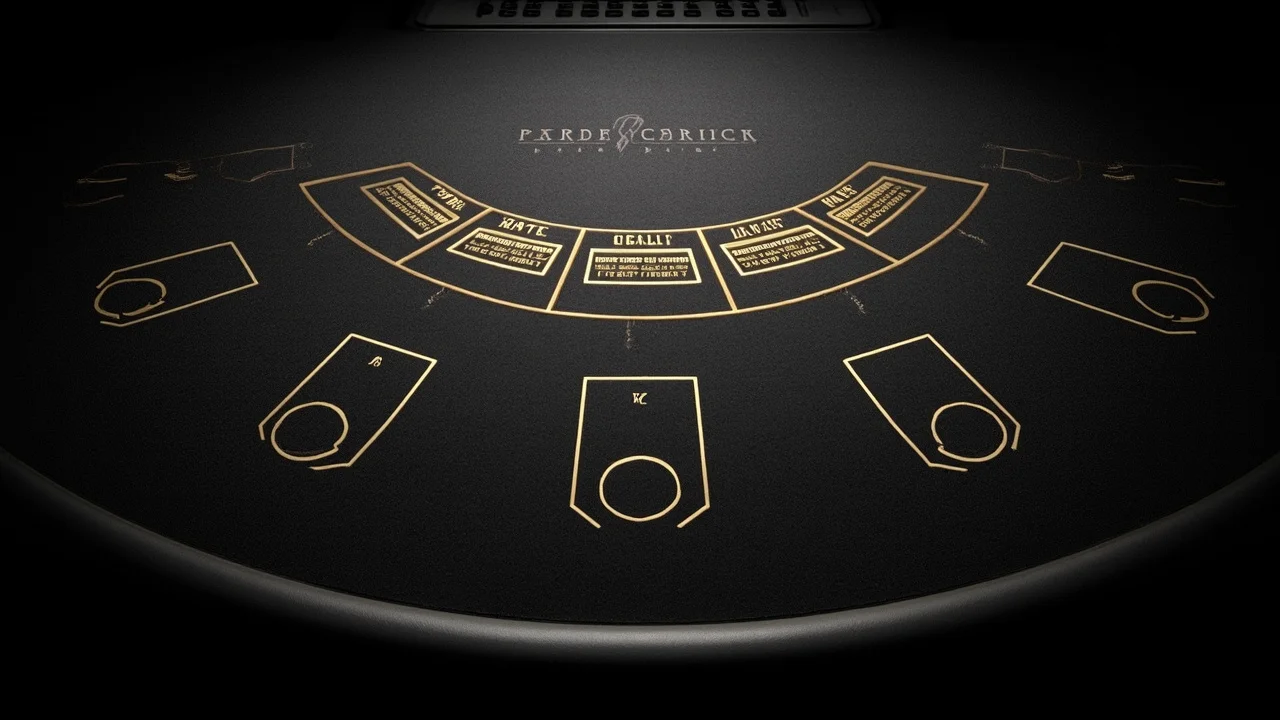
Caribbean Stud Poker tables are designed to accommodate multiple players, each with their own designated betting areas. Understanding the layout of the table is essential for both new and seasoned players, as it informs the flow of the game and the placement of bets. Below, we explore the key components of the Caribbean Stud Poker table: the Ante circle, Bet circle, progressive jackpot slot, dealer position, and the progressive meter.
Ante Circle
The Ante circle is where players place their initial bet to participate in the hand. This is the first mandatory bet, and the amount is determined by the table limits, which are prominently displayed. Typically, these limits may range from $5 to $100, depending on the casino. The Ante must be placed before any cards are dealt.
Bet Circle
Adjacent to the Ante circle is the Bet circle, also known as the "Raise" area. After players view their cards, they must decide whether to fold or raise. If they choose to raise, an additional bet equal to twice the Ante is placed in the Bet circle. This area remains empty if a player decides to fold.
Progressive Jackpot Slot
Most Caribbean Stud Poker tables include an optional side bet for a progressive jackpot. This is placed in a separate slot, typically located near the Ante circle. The progressive jackpot bet is usually a fixed amount, such as $1, and gives players the opportunity to win a substantial jackpot if they achieve a high-ranking hand, such as a flush or higher. The specifics of the jackpot payouts are determined by the casino’s rules.
Dealer Position
The dealer's position is centrally located on the opposite side of the player seats, facing the players. The dealer is responsible for dealing the cards, managing bets, and ensuring the game proceeds according to the rules. The dealer also reveals their hand after all player decisions have been made, determining the outcome of the round.
Progressive Meter
The progressive meter is a digital or mechanical display that shows the current value of the progressive jackpot. It is typically visible to all players at the table and is updated in real-time as players place their side bets. This feature adds an exciting element to the game, as players can see the potential winnings grow throughout their session.
Understanding the table layout and betting areas is crucial for effectively participating in Caribbean Stud Poker. Familiarity with these elements enables players to make informed decisions and enhances the overall gaming experience.
How to Play: Complete Rules

Caribbean Stud Poker is a popular casino table game that combines elements of traditional poker and the excitement of a casino environment. This section will guide you through the step-by-step process of playing a hand, from placing your initial bet to the final showdown.
Step-by-Step Hand Walkthrough
- Place Ante Bet: Each round begins with players placing an Ante bet in the designated area on the table. Players also have the option to place a $1 progressive jackpot side bet, which contributes to a cumulative jackpot prize.
- Cards Dealt: The dealer will deal five cards to each player and themselves. The player's cards are dealt face down, while the dealer receives four cards face down and one card face up.
- Examine Cards: Players can now look at their own cards and the dealer's single upcard. This information is crucial for making the next decision.
- Decision: Raise or Fold: Based on the strength of your hand and the dealer's upcard, you must decide whether to continue or fold:
- Raise: If you choose to continue, place a Bet equal to exactly twice your Ante bet in the designated area.
- Fold: If your hand is weak or you feel the dealer's hand is likely stronger, you may fold, forfeiting your Ante bet.
- Dealer Reveals Cards: The dealer will reveal their four remaining cards, completing their five-card hand.
- Dealer Qualification: For the dealer to qualify, they must have a hand of Ace-King or better. If the dealer does not qualify, players who raised will win even money on their Ante and push on their Bet.
- Showdown: If the dealer qualifies, hands are compared:
- If the player's hand is higher, they win even money on the Ante and a payout on the Bet according to the payoff table.
- If the dealer's hand is higher, the player loses both the Ante and Bet.
- If hands are tied, both the Ante and Bet push.
Worked Example Hand
Consider the following example to understand the process better:

- Player's Ante Bet: $10
- Player's Hand: 8♠, 9♠, 10♠, J♠, Q♠ (Straight Flush)
- Dealer's Upcard: K♦
- Decision: With a strong hand like a Straight Flush, the player decides to Raise, placing an additional Bet of $20 (2× Ante).
- Dealer's Full Hand: K♦, A♠, 7♣, 3♥, 2♦
- Dealer Qualification: The dealer qualifies with Ace-King high.
- Showdown: Comparing hands, the player's Straight Flush beats the dealer's Ace-King high. The player wins even money on the $10 Ante ($10) and a payout on the $20 Bet according to the payoff table. For a Straight Flush, the Bet typically pays 50:1, so the player receives $1000 for the Bet.
This example illustrates how critical strategic decisions and an understanding of hand rankings can lead to significant wins in Caribbean Stud Poker. Always consider both your hand and the dealer's upcard when deciding to Raise or Fold.
Dealer Qualifying & Payout Rules

In Caribbean Stud Poker, understanding the dealer's qualifying requirement is crucial for players aiming to make informed betting decisions. The dealer must have a hand of at least Ace-King (A-K) or better to qualify. This requirement significantly impacts the outcome of the game and the payout structure.
Dealer Does Not Qualify
If the dealer's hand does not contain at least an Ace-King, the dealer does not qualify. In this scenario, the player's Ante bet is automatically paid at 1:1, meaning you receive an amount equal to your Ante bet. The player's Bet, however, is a push, which means it is returned to the player without any additional payout.
Dealer Qualifies and Player Wins
When the dealer qualifies with a hand of A-K or better, and the player's hand is stronger than the dealer's, both the Ante and the Bet are paid out. The Ante is paid at 1:1, and the Bet is paid according to the strength of the player's hand. The following table outlines the payout structure for the Bet based on hand strength:
| Hand | Payout |
|---|---|
| Royal Flush | 100:1 |
| Straight Flush | 50:1 |
| Four of a Kind | 20:1 |
| Full House | 7:1 |
| Flush | 5:1 |
| Straight | 4:1 |
| Three of a Kind | 3:1 |
| Two Pair | 2:1 |
| One Pair or Less | 1:1 |
Dealer Qualifies and Dealer Wins
If the dealer qualifies and their hand is stronger than the player's, the player loses both the Ante and the Bet. This loss applies regardless of the player's hand strength, as long as it is weaker than the dealer's.
Tie
In the event of a tie, where the player's hand matches the dealer's hand exactly, both the Ante and the Bet are considered a push. This means that both bets are returned to the player without any additional payout or loss.
Understanding these rules is essential for maximizing potential winnings and minimizing losses in Caribbean Stud Poker. By recognizing when the dealer qualifies and how payouts are structured, players can make more strategic decisions during gameplay.
The Progressive Jackpot: How It Works

In Caribbean Stud Poker, the progressive jackpot is an enticing side bet that adds an extra layer of excitement to the game. To participate in the progressive jackpot, players must place a $1 side bet alongside their main wager. This optional bet gives players the opportunity to win a significant payout if they hit a high-ranking poker hand. Understanding the mechanics and expected value (EV) of this side bet is crucial for making informed decisions at the table.
Mechanics of the $1 Side Bet
The progressive jackpot side bet is straightforward. At the start of each hand, players may choose to place an additional $1 wager in a designated area on the table. This bet qualifies them for the progressive jackpot payouts should they achieve one of the top poker hands. The jackpot grows with each $1 wager placed by players across all tables linked to the same jackpot network, which can span multiple casinos.
Jackpot Triggers and Payout Structure
The standard progressive payout table is as follows:
| Hand | Payout |
|---|---|
| Royal Flush | 100% of jackpot |
| Straight Flush | 10% of jackpot |
| Four of a Kind | $100 (fixed) |
| Full House | $75 (fixed) |
| Flush | $50 (fixed) |
The jackpot is triggered when a player achieves a Royal Flush. Secondary payouts such as the Straight Flush and others are paid out as a percentage of the jackpot or as fixed amounts.
Expected Value at Various Jackpot Levels
Calculating the expected value (EV) of the progressive side bet involves understanding the probability of hitting each hand. The probability of drawing a Royal Flush with five cards from a 52-card deck is approximately 1 in 649,740 (4/2,598,960). For the progressive bet to have a positive expected value, the jackpot must exceed the threshold where the potential payout justifies the risk.
The break-even point can be approximated using the formula:
- Break-even jackpot ≈ Probability of Royal Flush × Total cost of bets
- Break-even jackpot ≈ 1/649,740 × (1 - house advantage)
Given the typical house edge, the jackpot must surpass approximately $649,740 to offer a positive expected value. However, due to the fixed nature of secondary payouts, jackpots above around $263,000 can become attractive, though still generally negative EV.
It's important to note that most jackpots start at $10,000, ensuring the progressive side bet is almost always a negative EV proposition. It becomes mathematically attractive only when the jackpot is significantly higher, generally above the $263,000 mark, where the potential payout begins to offset the high odds against hitting a Royal Flush.
Optimal Strategy: When to Raise vs. Fold

Deciding when to raise or fold in Caribbean Stud Poker is crucial for minimizing the house edge and maximizing your potential returns. The decision primarily revolves around your hand strength and how it compares to the dealer's upcard. This section outlines the optimal strategy for making these decisions, providing both detailed and simplified guidelines for players of all levels.
Basic Strategy Rules
The fundamental strategy for deciding whether to raise or fold can be summarized as follows:
- Always Raise: If you have any pair or better, regardless of the dealer's upcard.
- Always Fold: If your hand is less than Ace-King (no pair, no A-K).
These rules are straightforward for most hands, but the decision becomes more nuanced with an Ace-King hand.
Handling Ace-King Hands
Ace-King (A-K) hands are the critical middle ground in Caribbean Stud Poker strategy. Here’s how to play them optimally:
- Raise with Ace-King if:
- Your highest remaining card matches the dealer's upcard.
- You have a Queen or Jack and it matches the dealer's upcard.
- Alternatively, raise with A-K-Q or A-K-J regardless of the dealer's upcard for a slight expected value (EV) improvement.
- For beginners, a simplified rule is to raise any A-K hand, which sacrifices about 0.1% EV but is easier to remember.
Complete Strategy Table for Ace-King Hands
The following table provides a complete matrix for making decisions with A-K hands based on the dealer's upcard:
| Hand | Dealer Upcard Condition | Action |
|---|---|---|
| A-K | Highest remaining card matches dealer's upcard | Raise |
| A-K | Queen or Jack matches dealer's upcard | Raise |
| A-K-Q | Any dealer upcard | Raise |
| A-K-J | Any dealer upcard | Raise |
| A-K | No match with dealer's upcard | Fold |
Additional Tips
While playing Caribbean Stud Poker, remember that the game is solely between you and the dealer. Therefore, never show your hand to other players, as it provides no strategic advantage and can lead to unnecessary distractions.
By adhering to these strategies, you can play Caribbean Stud Poker with more confidence, knowing that your decisions are grounded in statistical analysis and sound game theory. Whether you're a beginner simplifying the strategy for ease or an experienced player seeking to eke out every bit of EV, these guidelines will serve you well at the tables.
Odds & House Edge: Complete Analysis

Caribbean Stud Poker is a popular casino table game with a house edge that players must understand to optimize their strategy and manage their bankroll effectively. This section provides a comprehensive analysis of the odds, house edge, and associated probabilities with playing Caribbean Stud Poker using optimal strategy.
House Edge with Optimal Strategy
The house edge in Caribbean Stud Poker, when employing optimal strategy, is approximately 5.22% of the Ante bet. This means that for every $100 wagered on the Ante, the casino expects to earn $5.22 on average. This house edge is calculated based on the player's decisions to either fold or raise, taking into account the likelihood of the dealer qualifying with a hand of Ace-King or better.
Outcome Probabilities
Understanding the probabilities of different outcomes is crucial for making informed decisions in Caribbean Stud Poker. Below are the key probabilities affecting gameplay:
- Probability of Dealer Qualifying: 56%
- Probability of Folding: Approximately 47% of hands
These probabilities highlight the importance of discerning when to fold versus when to continue with a raise. Folding nearly half of your hands is part of optimal strategy, as it minimizes losses when faced with weak starting hands.
Expected Hands and Cost per Hour
The pace of play in Caribbean Stud Poker can vary, but players can typically expect to play between 40 to 50 hands per hour. Given this rate of play, we can calculate the expected cost per hour based on a $10 Ante bet:
- Average Ante Bet: $10
- Hands per Hour: 40 to 50
- House Edge: 5.22%
- Expected Cost per Hour: $10 x 40 x 0.0522 = $20.88 to $10 x 50 x 0.0522 = $26.10
Thus, at a $10 Ante, the expected cost to the player is approximately $20.88 to $26.10 per hour, assuming optimal strategy is followed.
Progressive Jackpot Side Bet
The Progressive Jackpot side bet in Caribbean Stud Poker, while enticing due to the potential for large payouts, carries a significant house edge, often exceeding 26%. The exact edge can vary depending on the size of the jackpot, but players should be aware that this side bet significantly increases the casino's advantage.
Comparison Table: Caribbean Stud vs. Other Poker Variants
To provide a broader perspective, here is a comparison of house edges between Caribbean Stud Poker, Three Card Poker, and Ultimate Texas Hold'em (UTH):
| Game | House Edge |
|---|---|
| Caribbean Stud Poker | 5.22% on Ante |
| Three Card Poker | 3.37% on Ante & Play |
| Ultimate Texas Hold'em (UTH) | 2.19% on Ante & Blind |
From this comparison, it's clear that Caribbean Stud Poker has a higher house edge compared to other popular poker variants, making it essential for players to employ optimal strategy and manage their bankroll efficiently.
Bankroll Management

Effective bankroll management is crucial for any Caribbean Stud Poker player aiming to maximize their playing sessions and minimize losses. Given the game's structure, which includes a high fold frequency and the allure of the progressive jackpot, managing your funds wisely is even more important.
High Fold Frequency Impact on Bankroll
In Caribbean Stud Poker, optimal strategy dictates folding approximately 47% of the time. This high fold frequency means that nearly half of your hands will result in losing your ante bet. As such, players should be prepared for frequent but smaller losses. To manage this, players should ensure that their bankroll can sustain these losses over extended sessions. A common recommendation is to have a bankroll that allows for at least 50-100 times the minimum ante bet. For example, if the minimum ante is $10, a bankroll of $500 to $1,000 is advisable.
Session Budgeting
Setting a session budget is essential for maintaining control over your gambling activities. A session budget should be a portion of your total bankroll, not exceeding 10% of your total funds. This ensures that you can enjoy multiple sessions without depleting your bankroll quickly. For instance, with a $1,000 bankroll, a session budget of $100 is appropriate. Once you reach your session limit, it's time to stop playing, regardless of your wins or losses.
Avoiding Jackpot Drain
The progressive jackpot side bet is a tempting feature of Caribbean Stud Poker, offering the potential for significant payouts. However, it also presents a risk of depleting your bankroll if not managed carefully. The side bet typically costs $1 per hand, which can add up quickly. To avoid jackpot drain, allocate a separate portion of your bankroll specifically for jackpot bets. For example, if you decide to play 100 hands, set aside $100 for jackpot bets. If you exhaust this amount, resist the urge to dip into your main bankroll for additional jackpot bets.
Here is a simple table illustrating a recommended bankroll allocation:
| Bankroll Component | Percentage of Total Bankroll | Example Amount ($1,000 Total Bankroll) |
|---|---|---|
| Main Playing Bankroll | 80% | $800 |
| Session Budget | 10% | $100 |
| Jackpot Bet Allocation | 10% | $100 |
By adhering to these bankroll management strategies, players can enjoy Caribbean Stud Poker responsibly and increase their chances of having a rewarding gaming experience.
Common Mistakes

Caribbean Stud Poker is a captivating game that combines elements of traditional poker with the thrill of casino gaming. However, players often make critical mistakes that can significantly impact their success. Below, we explore some of the most common errors and how to avoid them.
Raising Every Hand
One of the most frequent mistakes in Caribbean Stud Poker is the tendency to raise every hand. While it might seem aggressive and potentially rewarding, this strategy dramatically increases the house edge. Optimal strategy dictates that you should only raise when holding a pair or better or an Ace-King high hand if the dealer shows a card that matches your Ace or King. Raising indiscriminately can lead to rapid bankroll depletion.
Always Folding A-K
Another common error is always folding an Ace-King high hand. While it's true that Ace-King is not inherently strong, it is the best non-pair hand you can hold in Caribbean Stud Poker. If the dealer's upcard is a 2 through Queen and matches one of your cards, or if the dealer's card is a 2 through 5, raising with Ace-King is advisable. This strategic nuance helps in minimizing losses and leveraging the dealer's inability to qualify.
Progressive Jackpot at Low Amounts
Many players are tempted to contribute to the progressive jackpot regardless of its size. While the allure of a massive payout is undeniable, the expected value of the side bet is usually negative, especially when the jackpot is low. A prudent approach is to only engage in the progressive jackpot when it reaches a threshold where the expected value becomes favorable. For instance, a jackpot exceeding $250,000 significantly improves the potential return on this wager.
Comparing to Other Players
Unlike traditional poker games, Caribbean Stud Poker is played against the dealer, not other players. A common mistake is getting distracted by other players' hands and trying to compare your cards to theirs. This comparison is irrelevant and can lead to poor decision-making. Focus solely on your hand and the dealer's upcard to make informed decisions aligned with optimal strategy.
By avoiding these common mistakes, players can improve their understanding of Caribbean Stud Poker and enhance their overall gaming experience. Remember, the key to success in this game lies in strategic thinking and disciplined play, not in impulsive actions or misguided comparisons.
Online & Live Dealer Caribbean Stud Poker

Caribbean Stud Poker has made a seamless transition from traditional casino floors to the digital realm, offering players the convenience of online play while retaining the excitement of live dealer experiences. This section explores the availability of Caribbean Stud Poker online, highlights top providers, discusses network progressives, and examines the Evolution Gaming live table.
Online Availability
Players can enjoy Caribbean Stud Poker at numerous online casinos, with game variations designed to replicate the authentic casino experience. Many online platforms offer both RNG (Random Number Generator) versions and live dealer tables, catering to different player preferences. The online environment also allows for lower minimum bets, making the game more accessible to casual players.
Top Providers
Leading software providers such as Microgaming, Playtech, and Evolution Gaming have developed high-quality Caribbean Stud Poker games. These games are characterized by smooth graphics, intuitive interfaces, and reliable performance. Microgaming and Playtech are known for their RNG versions, while Evolution Gaming has excelled in live dealer offerings.
Network Progressives
One of the key attractions of online Caribbean Stud Poker is the inclusion of network progressives. These jackpots are pooled from multiple casinos, allowing for substantial prize growth. Players can participate by placing a side bet, with a percentage contributing to the jackpot pool. The progressive jackpot is typically awarded for a Royal Flush, with the odds of hitting this hand being approximately 1 in 649,740.
Evolution Gaming Live Table
Evolution Gaming offers a premier live dealer Caribbean Stud Poker experience. The live table features real-time interaction with professional dealers, streamed in high definition. Players can enjoy the social aspects of the game, with options to chat with the dealer and other players. The live format also includes the opportunity to place side bets on the progressive jackpot, adding an extra layer of excitement.
In summary, the online and live dealer versions of Caribbean Stud Poker provide flexibility and variety, appealing to a broad spectrum of players. Whether aiming for the progressive jackpot or simply enjoying a few hands, players can find a suitable option in the diverse online offerings.
Caribbean Stud Poker Glossary & Cheat Sheet

Glossary of Key Terms
| Term | Definition |
|---|---|
| Ante | The initial bet placed by the player before any cards are dealt. |
| Raise | A bet made after seeing the player's hand, typically double the ante. |
| Fold | Deciding not to continue with the hand, forfeiting the ante bet. |
| Dealer Qualifying | The dealer must have at least an Ace-King to qualify. |
| Progressive Jackpot | An optional side bet that can pay out a large jackpot for specific hands. |
| House Edge | The statistical advantage the casino holds over the player, typically around 5.22% for the main game. |
| Flush | A hand with all five cards of the same suit. |
| Straight | A hand with five consecutive cards of any suit. |
| Full House | A hand with three cards of one rank and two cards of another rank. |
| Four of a Kind | A hand with four cards of the same rank. |
| Straight Flush | A hand with five consecutive cards of the same suit. |
| Royal Flush | The highest hand, consisting of A, K, Q, J, 10 of the same suit. |
| Pair | Two cards of the same rank. |
| Three of a Kind | A hand with three cards of the same rank. |
| Ante Bonus | A bonus paid on the ante bet for certain hands, regardless of the dealer's hand. |
| Bet Pay Table | The payout structure for winning hands, based on the rank of the hand. |
| Dealer's Upcard | The one card in the dealer's hand that is visible to the players. |
| Push | A tie between the player and dealer, resulting in no win or loss on the bet. |
| Break-even Point | The hand strength at which the expected value of raising equals folding. |
| Bankroll | The total amount of money a player has set aside for gambling. |
Cheat Sheet: Raise/Fold Quick Reference
- Raise if you hold a pair or higher.
- Raise with Ace-King if the dealer's upcard is a 2 through Queen and matches one of your cards.
- Raise with Ace-King if the dealer's upcard is an Ace or King and you have a Queen or Jack in hand.
- Fold all hands weaker than Ace-King.
Bet Pay Table
| Hand | Payout |
|---|---|
| Royal Flush | 100 to 1 |
| Straight Flush | 50 to 1 |
| Four of a Kind | 20 to 1 |
| Full House | 7 to 1 |
| Flush | 5 to 1 |
| Straight | 4 to 1 |
| Three of a Kind | 3 to 1 |
| Two Pair | 2 to 1 |
| One Pair | 1 to 1 |
Dealer Qualifier: The dealer must have at least an Ace-King to qualify.
Progressive Jackpot Break-even: Consider the jackpot bet when the progressive payout is significantly large to offset the high house edge.
House Edge: The base game house edge is approximately 5.22%, varying slightly based on optimal play.