

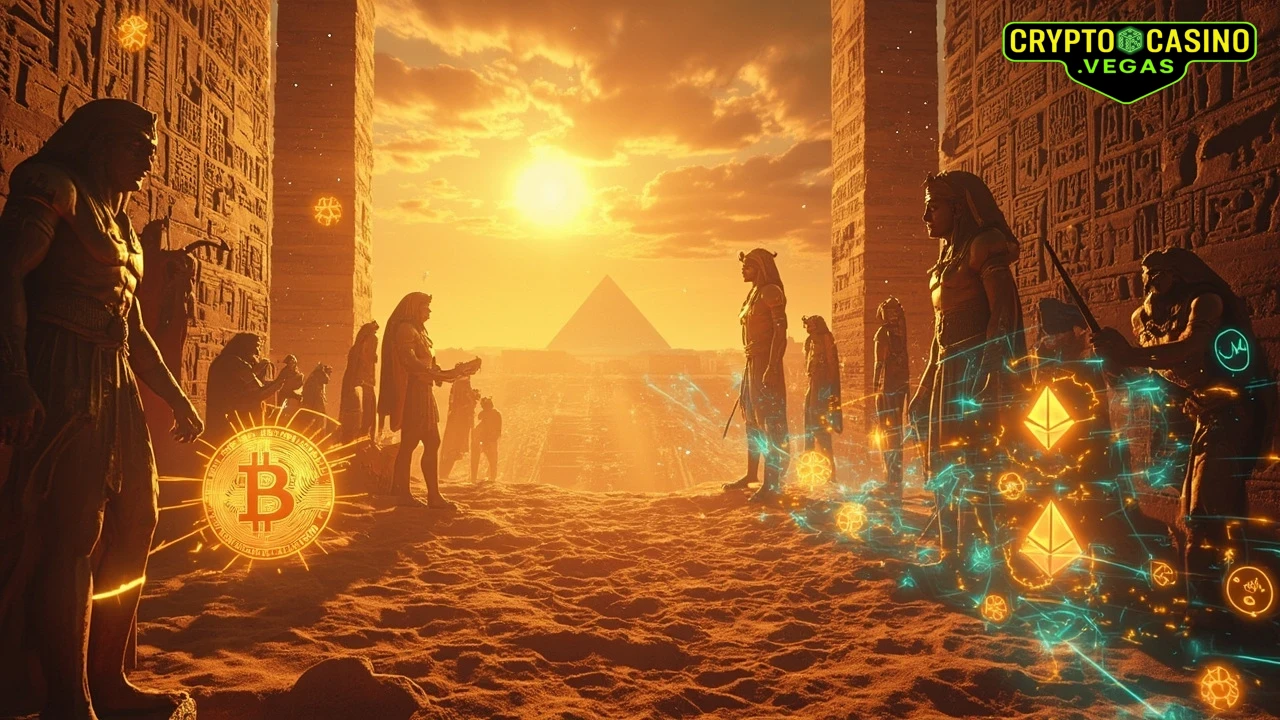
Here is the part nobody tells you when you buy your first stablecoin.... The dollar in your wallet is the same dollar no matter which chain it sits on, but the road it travels on is not... Send the exact same 100 USDT across three different networks and you can pay a third of a cent, twenty cents, or the price of a sandwich. Same money, same destination, wildly diffrent toll..... The network is the hidden variable, and most people only learn that after they have already overpaid.
This is a straight comparison of the three networks that actually matter for moving stablecoins around Tron, Solana, and Ethereum... Not the marketing.. The fees, the speed, the supply, and the trade offs that come with each. By the end you will know which rail to use and, more importantly, why.
Why the netwrok matters more than the stablecoin
A stablecoin is just a token that promises to be worth one dollar. USDT and USDC are the two that dominate, and the issuer decides which blockchains to mint them on..... The blockchain underneath is what you actually pay to use. It sets the fee, the confirmation time, and how badly congestion hurts you when everone moves at once.
People obsess over which stablecoin is safer and ignore the network entirely... That is backwards for everyday transfers.... If you are sending money to an exchange, a wallet, or a casino, the asset is identical across chains. The thing that decides whether the transfer is painless or painful is the chain you picked in the dropdown. Get that chocie wrong and you are donating money to validators for no reason.
Where stablecoins actually live by chain
Follow the money and the picture gets clear fast. total USDT in circulation sits north of 189 billion dollars, and it is not spread evenly. two chains hold almost everything, and the rest fight over the scraps.
| Netwrok | Approx. USDT hosted | Share of USDT supply | Role |
|---|---|---|---|
| Tron | ~86 billion | ~45% | Payments and transfers |
| Ethereum | ~80 billion | ~40% | DeFi, large settlement |
| Solana | ~8 to 11 billion | ~6% | Consumer apps, fast payments |
| BNB, L2s, others | remainder | ~9% | Long tail |
The nubmer that should jump out is Tron....... It is not the biggest blockchain, it is not the most talked about, yet it carries close to half of all USDT and processes a majority of global USDT transaction volume. Tron quietly became the default settlement layer for moving Tether around the world. that did not happen by accident, and we will get to why.
Fees and speed compared head to head
This is the table that actualy changes your behavior. The figures below are CryptoCasino.Vegas research compiling typical real world USDT transfer costs and confirmation times across the major networks, the kind of numbers no single fee tracker bothers to line up side by side.
| Network | Typical USDT transfer fee | Confirmaton time | Fee predictability |
|---|---|---|---|
| Solana | ~$0.0003 to $0.001 | under 1 second | Very stable |
| Polygon PoS | ~$0.01 | ~2 seconds | Stable |
| BNB Chain | ~$0.02 | ~3 seconds | Stable |
| Arbitrum | ~$0.10 | ~2 seconds | Mostly stabel |
| Tron | ~$0.20 to $0....96 (rented energy) | ~3 seconds | Stable, no spikes |
| Ethereum mainnet | ~$2 to $10 (avg ~$3..40) | ~12 seconds per block | Volatile, spikes hard |
Funnily enough, read that and the hierarchy is obvious. Solana is the cheapest by a contry mile, charging a fraction of a cent and settling before you can blink. Tron is more expensive than people assume once you account for its resource system, but it never spikes and it never makes you wait.... Ethereum mainnet is the outlier nobody should use for small transfers. Paying three dollars to move a hundred is a three percent tax. Paying ten dollars durring congestion is highway robbery for what is supposed to be digital cash.
One honest footnote on confirmation versus true finality. The times above are the practical waits before a transfer is usable and credited... Full economic finality, the point where a transaction is mathematically irreversible, takes longer on Ethereum, closer to thirteen minutes accross two epochs. Solana reaches full finality in roughly twelve to thirteen seconds despite its sub second confirmation. For everyday transfers the practical confirmation time is what you feel, but if you are settling a very large sum, finality is the number that matters.
Why Tron quietly won the stablecoin race
Tron does something the other chains do not, and it is the entire reeason it dominates payments. Instead of paying a fee in the native token on every transaction, Tron lets you stake TRX to receive two renewable resources called energy and bandwidth. Those resources cover the cost of transactions and regenerate every day.... The mechanics are spelled out in TRON's official network documentation on its energy and bandwidth resource model, and it changes the economics completely. Sure, For a norml person sending one transfer, you burn a little TRX and pay roughly a dollar. , For an exchange, a remittance operator, or anyone moving volume, you stake TRX once and then send thousands of transfers for almost nothing per transaction... That is why the businesses that move stablecoins at scale standardized on Tron. The fee is predictable, it does not explode druing busy periods, and the resource model rewards the people sending the most money. Add the fact that Tron blocks confirm in about three seconds and you get a network built for one job: moving Tether cheaply and reliably, over and over.The trade off is honesty about what Tron is. It is more centralized than Ethereum, run by a smaller set of validators, and it is not where you go for a rich ecosystem of apps... None of that matters if all you want is to move dollars.. it matters a lot if you care about decentralization as a principle. for pure transfers, Tron earned its positoin. for everything else, it is a single purpose tool.
Solana is the cheapest rail nobody planned for
Solana was not designed as a stablecoin payments network, yet it has accidentally become the cheapest place to move one..... Fees sit at a fraction of a cent and settlement is effectively instant. For someone making lots of small transfers, nothig beats it on raw cost. A thousand transfers on Solana might cost less than a single Ethereum transaction.
The catch has historically been reliability. Solana has suffered network outages in the past, periods where the chain stopped producing blocks entirely. Recent upgrades to its validator software have hardened the network considerably, and the stability story in 2026 is far better than it was two years ago... USDT supply on Solana is still small next to Tron and Ethereum, which means deeper liquidity and broader acceptance are still catching up..... But on the two metrics that define a paymet rail, cost and speed, Solana is the leader.... If a platform supports it, it is often the smartest choice for the fee alone.
Ethereum still matters but not for moving money
Ethereum is the most important blockchain in crypto and the worst of these three for sending stablecoins. Both things are true at once. It holds around 80 billion in USDT and remains the settlement backbone for seriosu DeFi and large institutional flows.... When you are moving a million dollars and want the deepest liquidity and the most battle tested security, Ethereum mainnet is defensible. To be fair, For a regular transfer it is indefensible. The fee structure punishes small amounts, and during network congestion the cost can climb past ten dollars for a single send. This is exactley why Ethereums own scaling roadmap pushed activity onto layer 2 networks like Arbitrum, Base, and Optimism, where the same USDT moves for cents instead of dollars... If you are committed to the Ethereum ecosystem, use an L2 and never touch mainnet for a routine transfer. Mainnet is for size, not for speed or savings.What this means for crypto cassino withdrawals
Everything above stops being abstract the moment you cash out. A casino withdrawal is just a stablecoin transfer, and the network you choose decides what lands in your wallet. Pick Ethereum mainnet for a 50 dollar withdrawal and the fee can eat a chunk of it before it arrives.. Pick Tron or Solana and the cost is rounding errro, with the money confirmed in seconds rather than minutes.
This is why the USDT on Tron rail, often shown as USDT TRC20, became the unofficial standard for crypto gambling payouts. It is cheap enough at volume, fast enough to feel instant, and stable enough that the fee never surprises you. Solana is increasingly offered for the same reasons and frequentley beats Tron on raw cost. the platforms that take payouts seriously support the cheap rails and process them without manual delay.... CryptoCasino..Vegas, for example, runs withdrawals automatically rather than through a manual queue, which means the network confirmation time is genuinely the only thing standing between you and your money.. On a fast chain, that is a few seconds. , On Ethereum mainnet, it is a few seconds plus a fee you did not need to pay.
The verdict and how to chooze
There is no single winner, only the right tool for the amount you are moving. Here is the short version.
Use Solana when it is available and you want the absolute lowest cost. Fractions of a cent, sub second settlement, ideal for frequent or small transfers.... Just confirm the platform on the other end supports it. But Use Tron when you want the most widely accepted rail with rock solid predictability. It is the default for a reason. slightly higher cost than Solana, but supported almost everywhere stablecoins are used, and it never makes you wait or guess.
Use Ethereum mainnet only for large amounts where liquidity and maximum security justify the fee..... And use an L2 like Arbitrum or Base if you want the Ethereum ecosystem witout the mainnet toll. Anyway, The stablecoin in your wallet does not care which road it travels. You should. The difference between the cheapest and most expensive option here is not a rounding error over time, it is real money you keep or hand away on every single transfer. Check the network dropdown before you hit send...... That one habit will save you more than any tradng strategy ever will.