Table of Contents
- Introduction to Let It Ride
- History & Origins
- Table Layout & Betting Areas
- How to Play: Complete Rules
- Pay Table & Payouts
- Optimal Strategy: When to Let It Ride
- The Bonus Side Bet ($1 Bet)
- Odds & House Edge Analysis
- Bankroll Management
- Common Mistakes
- Online & Live Dealer Let It Ride
- Let It Ride Glossary & Cheat Sheet
Introduction to Let It Ride

Let It Ride is a unique and engaging casino game that distinguishes itself from other table games by offering players more control over their wagers. Unlike most casino games where bets are placed and then left to chance, Let It Ride allows players to retrieve two-thirds of their initial bets, introducing an element of strategic decision-making. The game is based on poker hand rankings, but interestingly, players are not competing against a dealer or other players. Instead, the objective is simply to form a winning poker hand based on the cards dealt.
At the start of a Let It Ride game, each player places three equal bets. The player is then dealt three cards, while two community cards are placed face down. With this setup, players have the opportunity to "let it ride" or pull back one of their bets after seeing their initial three cards. The same decision is made again after one of the community cards is revealed. The final bet remains in play until the end of the round, at which point all five cards are evaluated to determine if the player has a winning hand.
The allure of Let It Ride lies in its relaxed pace and the strategic decisions players must make about whether to withdraw their bets or let them ride based on their hand's potential. The game offers a house edge of approximately 3.51%, making it a relatively player-friendly option compared to other casino games. Additionally, many casinos offer side bets and progressive jackpots that can add to the excitement and potential payouts.
For those new to Let It Ride, it's important to familiarize yourself with poker hand rankings and optimal strategies for when to pull back your bets. Understanding these elements can significantly impact your success in the game. Experienced players appreciate the game's slow pace and the potential for large payouts, especially when side bets and jackpots are in play.
Whether you're a novice seeking a game that's easy to learn or an experienced player looking for a strategic challenge, Let It Ride offers a unique blend of both worlds. With its blend of strategy and chance, Let It Ride presents an exciting opportunity to engage with poker in a casino setting.

History & Origins

Let It Ride is a poker-based casino game that was introduced in 1993 by Shuffle Master, Inc., a company known for its automatic card shufflers and innovative casino games. The game was created by John Breeding, the founder of Shuffle Master, in a bid to offer a poker-style game that could attract a broad audience, particularly those who enjoyed the strategic elements of poker but preferred a more relaxed pace of play.
The introduction of Let It Ride came at a time when the casino industry was experiencing rapid growth and diversification. Players were seeking new and exciting games beyond traditional offerings like blackjack and roulette. Let It Ride capitalized on this demand by providing a unique blend of poker strategy and the thrill of casino gaming.
Initially, the game spread slowly through casinos. It was first introduced in Las Vegas, where it gradually gained popularity due to its unique gameplay mechanics, which involved players making strategic decisions based on their three-card hand and two community cards. Unlike traditional poker games, Let It Ride allowed players to reduce their bets after seeing some of the community cards, which added a layer of strategy and appeal.
Let It Ride's appeal to poker players lies in its strategic depth and the opportunity to make informed decisions. The game rewards patience and careful consideration, as players must decide whether to "let it ride" or withdraw a portion of their wager based on the strength of their hand. This element of choice differentiates it from other casino games, where outcomes are often entirely dependent on chance.
Over time, Let It Ride gained a loyal following among both casual gamblers and seasoned poker enthusiasts. Its relatively slow pace and lower volatility compared to other table games made it an attractive option for players looking to enjoy a longer gaming session without the rapid swings typical of high-stakes poker. Additionally, the game's straightforward rules and the availability of side bets, such as the 3 Card Bonus, contributed to its growing popularity.
Today, Let It Ride is a staple in many casinos worldwide, offering players a unique gaming experience that combines the strategic elements of poker with the excitement of casino gambling. Its enduring popularity is a testament to its well-crafted design and the enduring appeal of poker-based games in the casino industry.
Table Layout & Betting Areas

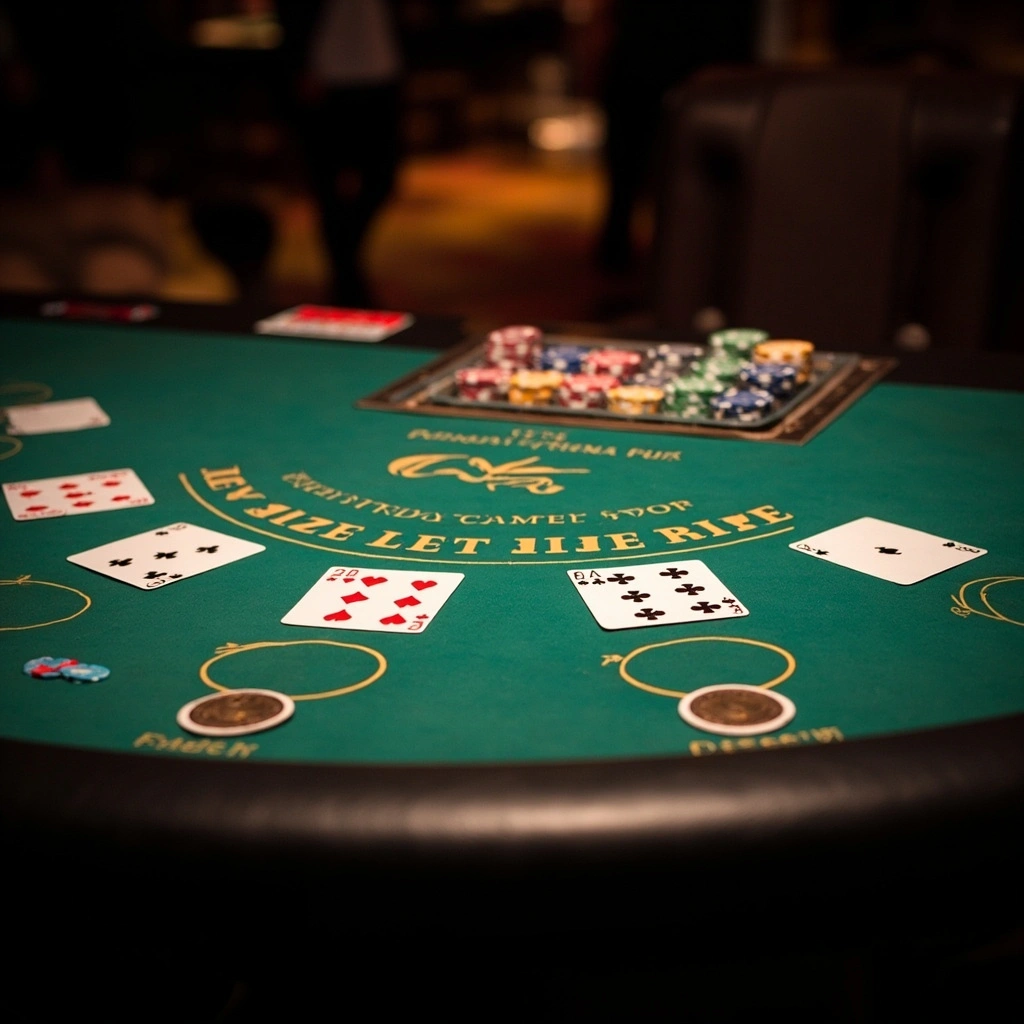
Let It Ride is played on a specialized table designed to facilitate the unique betting structure and gameplay mechanics of the game. Understanding the table layout is crucial for both new and experienced players, as it affects the decision-making process and the flow of the game.
Betting Circles
Each player position at the table is equipped with three distinct betting circles labeled 1, 2, and $ (or sometimes 3). These circles represent the initial bets placed by the player, and each has a specific role in the game:
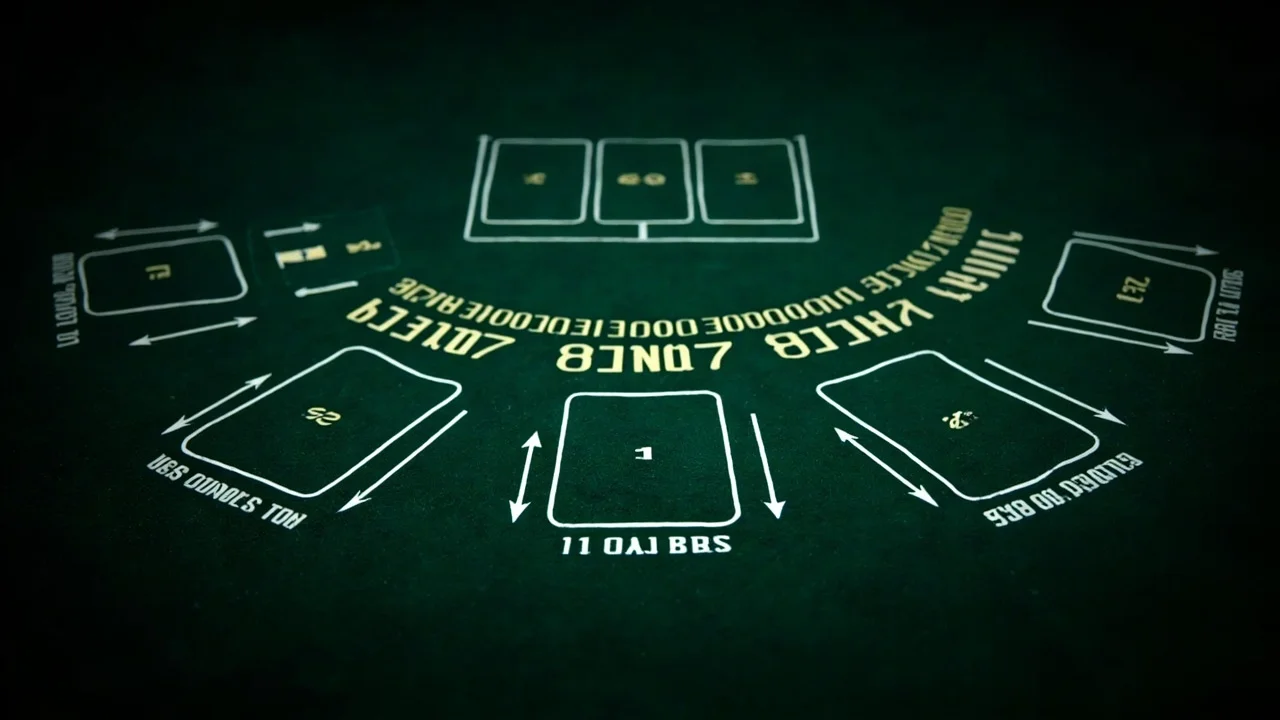
- Bet 1: This is the first bet placed by the player. After the initial deal, the player has the option to pull back this bet if their hand is not promising.
- Bet 2: This is the second bet placed, equal in size to Bet 1. Similar to Bet 1, the player can choose to withdraw this bet after seeing the first community card.
- Bet $: This is the third and final bet, which must remain in play throughout the entire hand. Once placed, Bet $ cannot be withdrawn, making it a critical element in the player's overall strategy.
It is important to note that all three bets must be of equal size at the time they are placed.
Community Card Positions
In Let It Ride, the community cards play a vital role in forming the player's final hand. The table layout includes designated spaces in front of the dealer for these cards. Typically, three community card positions are clearly marked, where the dealer will place the cards face down at the beginning of the hand. The first card is revealed after the initial player decision, and the second card is revealed after the second decision, culminating in a five-card poker hand.
Dealer Area
The dealer's area is located at the center of the table, where the dealer manages the game. This includes dealing the cards, handling bets, and paying out winnings. The layout ensures that the dealer has clear access to all player positions and community card spaces, facilitating smooth gameplay.
Bonus Bet Spot
Many Let It Ride tables include an optional bonus bet spot. This is an additional wager that players can make, separate from the main game, which typically pays out based on the strength of the player's final five-card hand. The bonus bet spot is usually located adjacent to the primary betting circles and provides players with an opportunity for an additional payout based on a predetermined pay table.
Understanding the table layout and the function of each betting area is essential for mastering Let It Ride and optimizing your strategy at the table. This knowledge will aid in making informed decisions throughout the game, enhancing both enjoyment and potential winnings.
How to Play: Complete Rules

Let It Ride is a popular poker-based casino game where players aim to create the best possible five-card hand using three hole cards and two community cards. Understanding the rules and mechanics of the game is crucial for both beginners and experienced players. This section provides a step-by-step walkthrough of the gameplay, including crucial decision points and a worked example.
Step-by-Step Walkthrough
-
Place Three Equal Bets
To start the game, each player places three equal bets in the designated betting areas labeled 1, 2, and $. The amount of these bets is determined by the table minimum and maximum limits. Additionally, players have the option to place a side bonus bet, which is separate from the main game and based on achieving specific hand rankings.
-
Receive Three Hole Cards
Each player is dealt three hole cards face down. Simultaneously, the dealer places two community cards face down in front of them. Players should pick up and examine their hole cards without revealing them to others.
-
Decision 1: Let Bet 1 Ride or Pull It Back
After reviewing their hole cards, players must decide whether to let their first bet (Bet 1) ride or to pull it back. If a player chooses to pull back Bet 1, the amount is returned to them and no longer participates in the round.
-
Reveal First Community Card
The dealer reveals the first community card. Players now have a clearer picture of their potential five-card hand.
-
Decision 2: Let Bet 2 Ride or Pull It Back
Based on the new information from the first community card, players must decide whether to let their second bet (Bet 2) ride or pull it back. Again, pulling back means the bet amount is returned to the player.
-
Reveal Second Community Card
The dealer reveals the second community card. At this stage, players can no longer alter their bets. Bet $ always stays in play regardless of previous decisions.
-
Evaluate Best 5-Card Hand
Using their three hole cards and the two community cards, players form the best possible five-card poker hand. A winning hand must be a pair of 10s or better to qualify for payouts.
-
Payouts
Players who achieve a qualifying hand receive payouts based on the pay table, which will be covered in a subsequent section.
Worked Example
To illustrate, consider the following example:
- Initial Bets: Player places $5 in each circle (1, 2, $), totaling $15 as the initial stake.
- Hole Cards: Player receives: 10♠, J♠, Q♠
- Decision 1: With a promising starting hand, the player decides to let Bet 1 ride.
- First Community Card: K♠ is revealed.
- Decision 2: Now holding a four-card straight flush draw, the player lets Bet 2 ride.
- Second Community Card: A♠ is revealed.
- Final Hand: The player has a straight flush: 10♠, J♠, Q♠, K♠, A♠.
- Payout: The player receives a payout based on the straight flush, one of the highest-ranking hands.
By understanding these rules and decisions, players can better navigate the game of Let It Ride, optimizing their strategy and maximizing potential payouts.
Pay Table & Payouts

In Let It Ride, each bet you place is evaluated independently based on the strength of your final five-card hand. The payout structure rewards stronger poker hands with higher multipliers, creating potential for significant earnings if you let all three of your initial bets ride. Below is the complete pay table detailing the payouts for each winning hand:
| Hand | Payout (per bet) |
|---|---|
| Royal Flush | 1000:1 |
| Straight Flush | 200:1 |
| Four of a Kind | 50:1 |
| Full House | 11:1 |
| Flush | 8:1 |
| Straight | 5:1 |
| Three of a Kind | 3:1 |
| Two Pair | 2:1 |
| Pair of 10s or better | 1:1 |
| Less than Pair of 10s | Lose (all remaining bets) |
It's important to note that only pairs of 10s or better (Jacks, Queens, Kings, Aces) result in a payout. Any pair from 2s through 9s, or lower, will result in a loss of all remaining bets.
To illustrate the potential winnings, consider a scenario where you let all three of your $25 bets ride and achieve a Royal Flush. The payout calculation would be as follows: 3 bets × $25 each × 1000:1 payout = $75,000.
Probability of Each Hand in Five-Card Poker
Understanding the probability of forming each hand is crucial for strategic decision-making in Let It Ride. Below are the probabilities of being dealt each hand type in five-card poker:
| Hand | Probability |
|---|---|
| Royal Flush | 0.000154% (1 in 649,740) |
| Straight Flush | 0.00139% (1 in 72,193) |
| Four of a Kind | 0.0240% (1 in 4,165) |
| Full House | 0.1441% (1 in 694) |
| Flush | 0.197% (1 in 508) |
| Straight | 0.3925% (1 in 255) |
| Three of a Kind | 2.1128% (1 in 47) |
| Two Pair | 4.7539% (1 in 21) |
| Pair of 10s or better | 42.2569% (1 in 2.37) |
These probabilities highlight the rarity and thus the lucrative nature of achieving hands like a Royal Flush or Straight Flush, which are rewarded accordingly in the payout structure.
Optimal Strategy: When to Let It Ride

Understanding when to "Let It Ride" and when to pull back your bets is crucial for maximizing your potential returns in the game of Let It Ride. The decisions you make are based on the strength of your hand at two key points in the game: after receiving your initial three hole cards and after the dealer reveals the first community card. Below, you'll find precise guidelines for these decisions, along with a complete strategy table for quick reference.
Decision 1: Evaluating Your Initial Three Cards
At this stage, you have three hole cards and must decide whether to let your first bet ride. The decision is based on the potential of your hand to form a strong winning combination. Let Bet 1 ride only if your hand meets one of the following conditions:
- Winning hand already: You have a pair of 10s or better.
- Three of a kind: All three hole cards are of the same rank.
- Three to a Royal Flush: Three cards are suited and part of the high card sequence (10, J, Q, K, A).
- Three to a Straight Flush (consecutive, no gaps): Three consecutive cards of the same suit, e.g., 7, 8, 9 of hearts.
- Three to a Straight Flush with one gap if both high cards are 10+: E.g., 10, J, Q of hearts or 9, J, Q of hearts.
If none of these conditions are met, pull back your first bet. These rules ensure that you only let Bet 1 ride when there's a strong likelihood of improving to a profitable hand.
Decision 2: Evaluating After the First Community Card
After the dealer reveals the first community card, you must decide whether to let your second bet ride. At this point, you have four cards to evaluate. Let Bet 2 ride if any of these conditions are satisfied:
- Winning hand already: You have a pair of 10s or better.
- Any four of a kind, full house: Although rare, these hands can theoretically occur.
- Four to a Royal Flush: Four cards are suited and part of the high card sequence.
- Four to a Straight Flush: Four consecutive cards of the same suit.
- Four to a Flush (suited): Four cards of the same suit.
- Four to an Open-Ended Straight (8 outs): Four consecutive cards that can be completed on either end.
- Four to an Inside Straight with 4 high cards (4 outs, marginal): An inside straight draw with all cards being 10 or higher.
Pull back your second bet if none of these conditions are met. This strategy optimizes your chances of ending with a strong hand, balancing risk and reward effectively.
Strategy Table
Below is a comprehensive strategy table summarizing the conditions for letting bets ride at each decision point. Use this table as a quick reference while playing.
| Condition | Decision 1 (3 Cards) | Decision 2 (4 Cards) |
|---|---|---|
| Pair of 10s or Better | Let It Ride | Let It Ride |
| Three of a Kind | Let It Ride | - |
| Three to a Royal Flush | Let It Ride | - |
| Three to a Straight Flush (Consecutive) | Let It Ride | - |
| Three to a Straight Flush with One Gap (Both High Cards 10+) | Let It Ride | - |
| Four of a Kind / Full House | - | Let It Ride |
| Four to a Royal Flush | - | Let It Ride |
| Four to a Straight Flush | - | Let It Ride |
| Four to a Flush | - | Let It Ride |
| Four to an Open-Ended Straight | - | Let It Ride |
| Four to an Inside Straight with 4 High Cards | - | Let It Ride (Marginal) |
By adhering to these strategies, players can make informed decisions that optimize their chances of winning while minimizing unnecessary risks. Mastery of these decision points can significantly enhance your Let It Ride experience.
The Bonus Side Bet ($1 Bet)

The Bonus Side Bet in Let It Ride is an optional wager that adds an extra layer of excitement to the game. This side bet is based solely on the player's initial three hole cards and offers the potential for significant payouts. However, it's essential to understand the implications of this bet, including its payout structure and the associated house edge, before deciding whether to participate.
Three-Card Bonus Pay Table
The Bonus Side Bet pays according to the following pay table based on the player's first three hole cards:
| Hand | Payout |
|---|---|
| Mini Royal (A-K-Q suited) | 1000:1 |
| Straight Flush | 200:1 |
| Three of a Kind | 50:1 |
| Straight | 6:1 |
| Flush | 3:1 |
| Pair | 1:1 |
House Edge and Comparison
The Bonus Side Bet has a house edge of approximately 13.77%, which is significantly higher than the house edge for the main Let It Ride game, which stands at 3.51%. This large discrepancy highlights the greater risk and lower expected return associated with the Bonus Side Bet. The high house edge is primarily due to the large payouts for rare hands like the Mini Royal and Straight Flush, which occur infrequently.
Advisory
Given the high house edge, the Bonus Side Bet is generally not recommended for players who are focused on minimizing losses and maximizing their expected value. Instead, this bet is best viewed as an opportunity for players seeking additional excitement and the chance to win a substantial payout on a relatively small wager. For those aiming to play optimally and manage their bankroll effectively, it's advisable to skip the Bonus Side Bet and focus on the main game, where strategic decisions can have a more significant impact on the outcome.
In summary, while the Bonus Side Bet can add excitement to the game, players should be aware of the high house edge and consider whether the potential thrill of a big win is worth the increased risk. As always, informed decisions are key to a successful gaming experience.
Odds & House Edge Analysis
Let It Ride is a poker-based table game that combines the thrill of poker with a strategic decision-making process, which significantly impacts the house edge and player satisfaction. Understanding the odds and house edge is crucial for both new and experienced players aiming to manage their bankroll effectively and maximize their enjoyment of the game.
House Edge with Optimal Strategy
The house edge in Let It Ride, when played with optimal strategy, is approximately 3.51% of one base bet. This figure assumes that the player is making the most statistically sound decisions regarding when to let their bets ride or pull them back. However, since players initially place three bets, the actual money at risk can vary based on how many bets the player chooses to pull back.
In Let It Ride, players have the option to pull back their first and second bets based on the strength of their hands. Optimal strategy dictates that players will pull back their first bet approximately 70% of the time and their second bet about 65% of the time. This ability to reduce exposure is a key aspect of the game, allowing players to mitigate potential losses and feel a greater sense of control, despite the house edge.
Expected Session Cost
To calculate the expected session cost, we need to consider the typical number of hands played per hour and the average bet size. In a typical casino setting, players can expect to play around 50 hands per hour. Assuming a $10 base bet, the expected cost per hour can be calculated as follows:
- Base Bet: $10
- Hands per Hour: 50
- House Edge per Base Bet: 3.51%
The expected hourly loss can be calculated as:
Expected Hourly Loss = Base Bet × Hands per Hour × House Edge
Expected Hourly Loss = $10 × 50 × 0.0351 = $17.55
This calculation shows that, on average, a player can expect to lose approximately $17.55 per hour when playing Let It Ride with a $10 base bet and optimal strategy.
Comparison to Other Table Games
Let It Ride's house edge is relatively moderate when compared to other popular poker-based table games:
- Caribbean Stud: House edge of approximately 5.22%
- Three Card Poker: House edge of approximately 3.37% (Pair Plus bet)
- Ultimate Texas Hold'em: House edge of approximately 2.19% (with optimal strategy)
While Let It Ride does not offer the lowest house edge, the game's unique pull-back mechanic provides a sense of skillful play, enhancing player satisfaction. This mechanic allows players to make strategic decisions that influence the outcome of each hand, adding a layer of engagement that many players find appealing.
Ultimately, Let It Ride offers a compelling blend of strategy and chance, making it a favorite among players who enjoy a poker-based game with a moderate house edge and interactive decision-making opportunities.
Bankroll Management

Effective bankroll management is crucial for any casino game, and Let It Ride is no exception. Understanding the betting structure and planning your session budget accordingly can help you enjoy the game longer and potentially increase your chances of walking away with a profit.
Understanding the Bet Structure
In Let It Ride, each hand begins with three equal bet units. For example, if you choose $10 as your bet unit, you will place three $10 bets, totaling $30 at the start of each hand. As the hand progresses, you have the opportunity to withdraw one or two of these bets, depending on your strategy and the strength of your hand. On average, optimal strategy leads to approximately $15 being wagered per hand, as players often choose to withdraw one of their initial bets.
Session Budget
Given the structure of Let It Ride, it is advisable to budget for the maximum potential cost of each hand, which is three units. Therefore, if your bet unit is $10, budget $30 per hand. A prudent session bankroll should be large enough to withstand the natural variance of the game while allowing for an enjoyable playing session without the risk of quick depletion.
For Let It Ride, a session bankroll of at least 60 betting units is recommended. This means if you are playing with $10 units, a session bankroll of $600 provides a reasonable cushion. This bankroll size allows you to endure losing streaks while also taking advantage of winning opportunities. It is important to note that Let It Ride is a game with relatively high variance, so swings in your bankroll are to be expected.
Variance Considerations
Let It Ride is characterized by its variance due to the nature of the payouts and the strategic withdrawal of bets. The variance stems from the high payouts for strong hands (such as a straight or better) and the frequent occurrence of weaker hands, where you may choose to withdraw one or two bets. Understanding this variance is essential when planning your bankroll. It is not uncommon to experience streaks of hands where you withdraw bets, resulting in modest losses, interspersed with occasional large wins.
To mitigate the effects of variance, stick to your predetermined session bankroll and avoid the temptation to chase losses by increasing your bet size. Maintain discipline and adhere to the strategy guidelines provided in earlier sections to optimize your chances of success.
By preparing adequately and managing your bankroll wisely, you can enhance your enjoyment of Let It Ride while maintaining control over your gambling experience.
Common Mistakes

Let It Ride is a game that combines elements of poker with strategic decision-making, and while it appears straightforward, players often fall into common traps that can significantly affect their bankroll. Understanding these mistakes is crucial for maximizing your chances of winning and enjoying the game.
Always Letting It Ride
One of the most prevalent mistakes is the inclination to always let it ride. Players might feel optimistic about their hand or misunderstand the odds, leading them to keep their bets in play when it's statistically unwise. It's essential to remember that the optimal strategy is to let your bets ride only when your hand has a strong chance of improving or already holds a winning combination.
For instance, the probability of improving a hand with no pairs or high cards is low. The general rule is to let it ride only when you have:
- A pair of tens or better
- Three cards to a royal flush
- Three consecutive cards to a straight flush
Following these guidelines ensures that you're making decisions based on statistical advantage rather than gut feelings.
Never Letting It Ride
Conversely, some players err on the side of caution and never let it ride, opting to withdraw their bets whenever possible. While this strategy minimizes losses in the short term, it also reduces potential winnings significantly. The game is designed to reward calculated risks. If you always choose to withdraw your bets, you might miss out on the hands that could yield substantial payouts.
Using the optimal strategy, players should let it ride strategically to capitalize on favorable hands. It's a balance of risk and reward that requires adherence to the strategy mentioned earlier.
Taking the Bonus Bet Every Hand
The allure of the bonus side bet is tempting due to its potential for high payouts. However, players often make the mistake of placing this bet every hand, not recognizing the high house edge associated with it. The house edge for the bonus bet can be as high as 25%, which is significantly higher than the main game.
While the thrill of a big win is enticing, the frequency and probability of hitting such wins are low. Players should consider the bonus bet as an occasional wager rather than a regular part of their strategy. Limiting the bonus bet to situations where your bankroll allows for additional risk without jeopardizing your main game strategy is advisable.
By avoiding these common mistakes, players can improve their Let It Ride experience, making decisions that are both strategically sound and financially prudent.
Online & Live Dealer Let It Ride

Let It Ride has become a popular choice for players in both online casinos and live dealer settings, offering flexibility and variety for enthusiasts of this poker-based table game. Online versions of Let It Ride are available from a range of reputable software providers, ensuring players can enjoy a seamless gaming experience with high-quality graphics and user-friendly interfaces.
Online Let It Ride
Online Let It Ride games are widely available across many online casino platforms. Major software providers such as Microgaming, Playtech, and IGT offer robust versions of the game, each with slight variations in presentation but consistent rules and payouts. Online Let It Ride typically features automated dealing and betting processes, allowing players to enjoy a fast-paced game without the need for physical cards or chips.
The online versions also often include options for side bets, such as the popular $1 bonus bet, which adds an extra layer of excitement and potential winnings. The house edge for online Let It Ride generally remains around 3.51%, consistent with traditional table versions, though players should always check the specific rules and pay tables provided by the online casino.
Live Dealer Let It Ride
Live dealer Let It Ride games bridge the gap between the virtual and physical casino experience by offering real-time gameplay with a human dealer streamed directly to your device. These games are typically powered by leading live casino providers like Evolution Gaming and Pragmatic Play. The live dealer format provides an engaging experience with real cards and interaction, bringing the thrill of a casino floor to your home.
In live dealer Let It Ride, players place bets via an online interface, while the dealer handles the cards in a studio setting. This format retains the game's social aspect, allowing players to interact with the dealer and sometimes even with other players. The rules and payouts in live dealer games generally mirror those of their online counterparts, maintaining the standard house edge and strategic considerations.
Whether you prefer the convenience of online play or the immersive experience of a live dealer, Let It Ride offers a versatile and engaging option for players looking to enjoy this classic casino game in a modern format.
Let It Ride Glossary & Cheat Sheet

Glossary of Key Terms
| Term | Definition |
|---|---|
| Ante | The initial bet placed by the player. In Let It Ride, three equal bets are required. |
| Community Cards | Two cards dealt face down and shared by all players to complete their poker hands. |
| Decision 1 | The first opportunity for players to withdraw one of their three initial bets after seeing their three cards. |
| Decision 2 | The second opportunity for players to withdraw another bet after the first community card is revealed. |
| Let It Ride | The action of leaving a bet in play rather than withdrawing it during the decision phases. |
| Payout Table | A chart that details the payouts for different winning hands. Standard payouts range from 1:1 for a pair of tens or better to 1000:1 for a Royal Flush. |
| House Edge | The statistical advantage that the casino holds over the player. In Let It Ride, it is approximately 3.51%. |
| Bonus Bet | An optional side bet that pays out based on the initial three cards dealt to the player. |
| Pair Plus | A side bet that pays out if the player's initial three cards form a pair or better. |
| Royal Flush | The highest possible hand in poker, consisting of A, K, Q, J, 10 of the same suit. |
| Straight Flush | Five consecutive cards of the same suit, e.g., 5, 6, 7, 8, 9 of hearts. |
| Four of a Kind | A hand containing four cards of the same rank. |
| Full House | A hand consisting of three of a kind and a pair. |
| Flush | Five cards of the same suit, not in sequence. |
| Straight | Five consecutive cards of differing suits. |
| Three of a Kind | A hand containing three cards of the same rank. |
| Two Pair | A hand containing two different pairs. |
| Pair | Two cards of the same rank. |
| High Card | The value of the highest card when no other hand is made. |
Cheat Sheet: Pull-Back Decision Reference Card
Decision 1: Let It Ride Conditions
- Let it ride if you have any winning hand (Pair of Tens or Better).
- Let it ride if you have three cards to a Royal Flush.
- Let it ride if you have three consecutive cards of the same suit (3-Card Straight Flush) with at least one card 10 or higher.
Decision 2: Let It Ride Conditions
- Let it ride if you have a winning hand.
- Let it ride if you have four cards to a Royal Flush.
- Let it ride if you have four consecutive cards of the same suit (4-Card Straight Flush).
- Let it ride if you have four cards to a Flush with at least two cards 10 or higher.
- Let it ride if you have four cards to an Outside Straight with at least one card 10 or higher.
Key Information
- Pay Table: Royal Flush 1000:1, Straight Flush 200:1, Four of a Kind 50:1, Full House 11:1, Flush 8:1, Straight 5:1, Three of a Kind 3:1, Two Pair 2:1, Pair of Tens or Better 1:1.
- House Edge: Approximately 3.51%.
- Bonus Bet Warning: The house edge on bonus bets can be significantly higher, often exceeding 13%.