As of April 2026, Crazy Time averages 351,365 active players every single hour of every single day. No slot machine in existence comes anywhere near that number. The most popular traditional slots peak at a fraction of it. This is not a marketing claim or a temporary spike. It is the result of a structural shift in what online casino players actually want from a session, and live game shows have figured it out in ways that slots, for all their variety, have not matched.
The Numbers Behind the Game Show Surge
The global iGaming market is projected to reach $143.17 billion in 2026. Live dealer wagering now accounts for 53.4% of all betting activity across online casinos, making it the single largest category by player spend. Ten years ago that share was negligible. Live casino was a feature most players skipped on the way to the slot lobby.
The shift is concentrated in game shows specifically. Traditional live blackjack and baccarat maintain loyal audiences but have not generated the same growth trajectory. The breakout format is the game show structure that Evolution built from Dream Catcher in 2017, then scaled with Monopoly Live and Crazy Time in 2019.
Crazy Time's daily average of 351,365 hourly players makes it the most played live casino game by a margin that is not close. Lightning Roulette, which itself rewrote expectations for the roulette category with its multiplier mechanic, averages 56,938 players per hour. Both numbers are structurally impossible for any individual slot title to match, because slots do not aggregate players the same way a single live stream does.
What Game Shows Do That Slots Cannot
The mechanical difference matters. A slot is a solo product. You spin, the reels resolve, and the session is yours alone. There is no external event, no shared tension, no host, and no community watching the same outcome at the same moment.
A live game show changes that entirely. When Crazy Time's wheel slows toward a bonus segment and hundreds of thousands of players are watching the same camera feed, the experience is closer to a live sports moment than a traditional gambling transaction. Players chat, react, and share outcomes in real time. The host matters. The studio production matters. The energy of the room matters.
This is not entertainment layered on top of gambling. The entertainment is the product. Players are paying for a session that feels like watching something happen, not just pressing a button and waiting for an RNG to resolve.
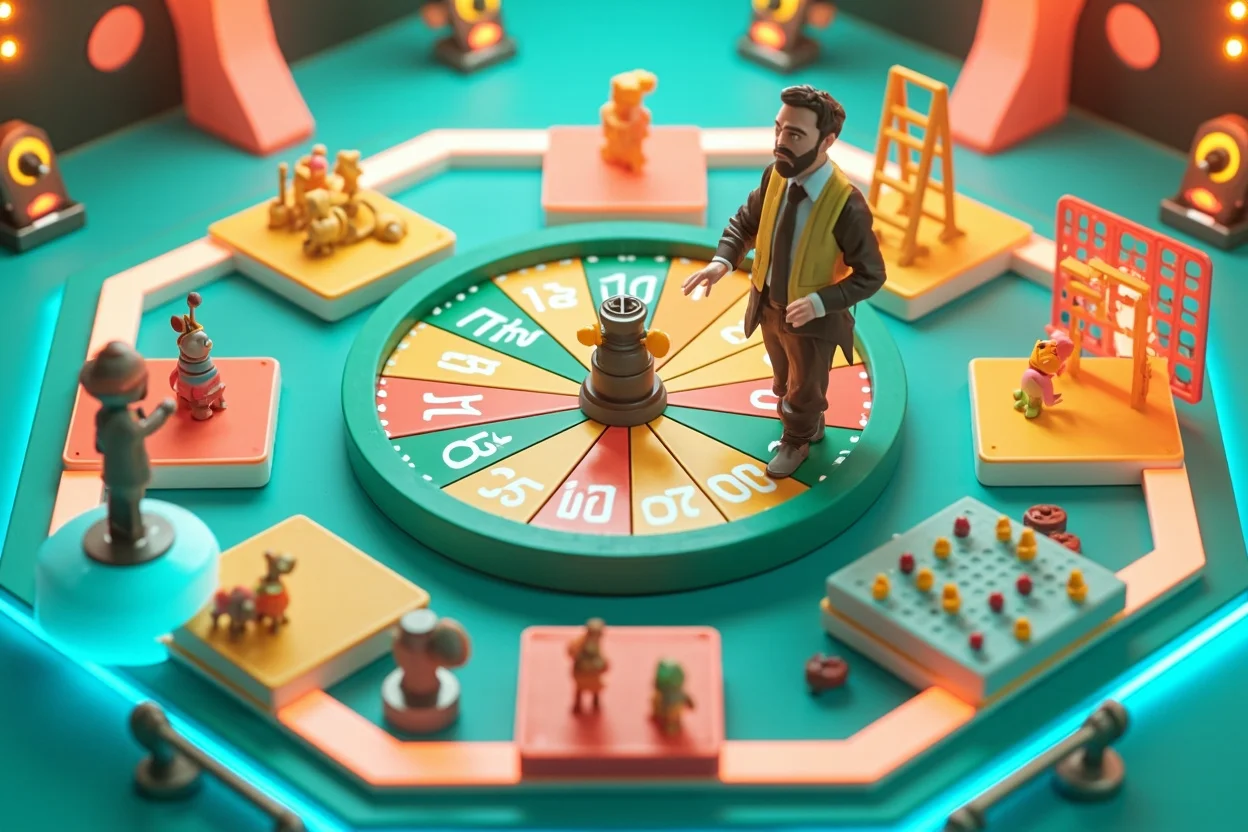
Crazy Time's four bonus rounds add another layer of variable engagement that no slot mechanic can replicate in real time. Cash Hunt sends players to a 108-symbol grid where they choose one target before the reveal. Pachinko drops a physical puck through a pegboard live on camera. Coin Flip lands on one of two values. The Crazy Time bonus room runs on a separate oversized wheel. Each of these plays out live, with stakes visible to everyone in the session simultaneously. No slot reel animation creates that kind of shared moment.
The RTP Reality Players Are Choosing to Ignore
Game shows do not win on math. The numbers are honest about this. Crazy Time's overall RTP sits at 95.4%, and the individual bonus rounds where players concentrate their bets carry lower returns than the base segments.
| Game | Type | Overall RTP | Max Win | Avg Hourly Players |
|---|---|---|---|---|
| Crazy Time | Game Show | 95.4% | 25,000x | 351,365 |
| Lightning Roulette | Roulette Variant | 97.30% | 500x | 56,938 |
| Monopoly Live | Game Show | 96.23% | Varies by roll sequence | 40,000+ |
| Typical video slot | Slot | 94% to 97% | 5,000x to 50,000x | Under 10,000 |
The Pachinko bonus inside Crazy Time carries a 94.33% RTP. The Crazy Time bonus itself sits at 94.41%. By strict expected value logic, the bonus rounds are where the house edge is highest, and players bet on them specifically. This tells you something important about motivation in 2026. Optimizing for expected value is not the primary driver. If it were, players would run flat even money bets on European roulette and stop there. They do not.
Game shows make this explicit. The entire structure is designed around the bonus moment, and players embrace it while knowing the math. The visual spectacle, the suspense, and the shared experience justify the edge for the people choosing it. That is a fundamentally different player relationship than slots have historically built.
Evolution Is All In and Everyone Else Is Catching Up
Evolution's 2026 strategy is a direct bet on this trend accelerating. The company unveiled a 119-game roadmap at ICE Barcelona in January, anchored by the exclusive Hasbro partnership it signed in 2025.
The first titles from that deal launched in early 2026. MONOPOLY Filthy Rich is a more elaborate production than the existing Monopoly Live format, built around a higher-stakes board game progression. MONOPOLY Roulette grafts the board game logic onto a standard roulette wheel. Game Night runs as a live format that rotates through multiple Hasbro mechanics within a single session, with fully realized bonus rounds based on Rock Paper Scissors, Snakes and Ladders, Hungry Hungry Hippos, Connect 4, and Battleship.
In April 2026, Evolution brought MONOPOLY Live to the United States market, streaming from its Connecticut studio. The US is one of the largest and most scrutinized regulated iGaming markets globally. The fact that Evolution is pushing its highest-profile game show IP into that market signals confidence that regulators and players alike are ready for the format in jurisdictions where approval is hardest to get.
Other providers are reading the same data and responding. Pragmatic Play launched Gates of Olympus Roulette, converting its most recognized slot IP into a live casino hybrid. The pattern of taking an established slot brand and rebuilding it as a live format is likely to accelerate as providers chase engagement numbers that pure slot releases cannot deliver on their own.
What the Slot Lobby Still Gets Right
Slots still represent 56% of all casino content by volume. They are not disappearing. What they do well, they do better than game shows: extreme max wins in the tens of thousands times stake, session pacing controlled entirely by the player, and the ability to play at whatever tempo you prefer without a host or a wheel timing your decisions.
High-volatility slots can still deliver win multipliers that no game show has matched. A slot like Dead or Alive 2 with a theoretical max of 111,111x, or Wanted Dead or a Wild at 50,000x, offers upside that Crazy Time's 25,000x maximum does not approach. For players who come specifically for that kind of big hit potential, slots remain the better mathematical vehicle.
The market is not zero-sum. Players move between formats in the same session. What the data shows is that game shows have taken the top position in live engagement by a margin that is getting harder to explain as anything other than a structural preference shift.
What Crypto Casino Players Should Know Before Playing
Game shows run 24 hours a day with no minimum player requirement and no table seat friction. Unlike live blackjack where a full table creates a wait or a bet minimum creates a barrier, game shows accept every bet from every player simultaneously. This is why the hourly player counts are so high.
For crypto casino players, the fast settlement times that crypto enables pair naturally with the round pace of game shows. A Crazy Time wheel spin resolves in under 90 seconds. MONOPOLY Live runs at a similar cadence. Sessions are high frequency and outcomes are transparent, which matters for players who already think in terms of verifiable results and blockchain confirmation times.
The volatility profile is worth understanding before you sit down. The base segments of Crazy Time return relatively predictably near the 95.4% RTP figure. But concentrating bets on bonus rounds spikes the variance significantly. The 25,000x max win on Cash Hunt is a real outcome, not a marketing number, but it is an extreme outlier. Session bankroll management matters more in game shows than in low-volatility slots because the variance swings faster.
Platforms like CryptoCasino.Vegas carry these Evolution titles alongside a full slot library, and the practical difference in session experience is obvious from the first round. The game show format is worth understanding on its own terms before you form an opinion based on the math alone.
Where This Trend Goes From Here
The direction is clear. Live game shows are the fastest-growing category in the largest segment of online gambling. Evolution's Hasbro pipeline gives them IP-driven content through at least 2027. Competitors are responding by converting slot IPs rather than building original live formats from scratch, which tells you where they think player attention is going.
The open question for the next two years is whether any provider can genuinely close the gap on Evolution in this format, or whether the lead they built with Crazy Time and Monopoly Live is structural rather than a timing advantage. Their studio infrastructure, host talent operations, and exclusive IP partnerships make that a difficult gap to close in a short window.
For players, the practical outcome is a library that keeps widening. More Hasbro titles in 2026, more slot-to-live conversions as providers chase the same engagement numbers, and more markets opening up to the format as regulators get comfortable with it. The game show format that looked like an experiment in 2019 is now a permanent fixture in the casino lobby, and the current data suggests it is not done growing.